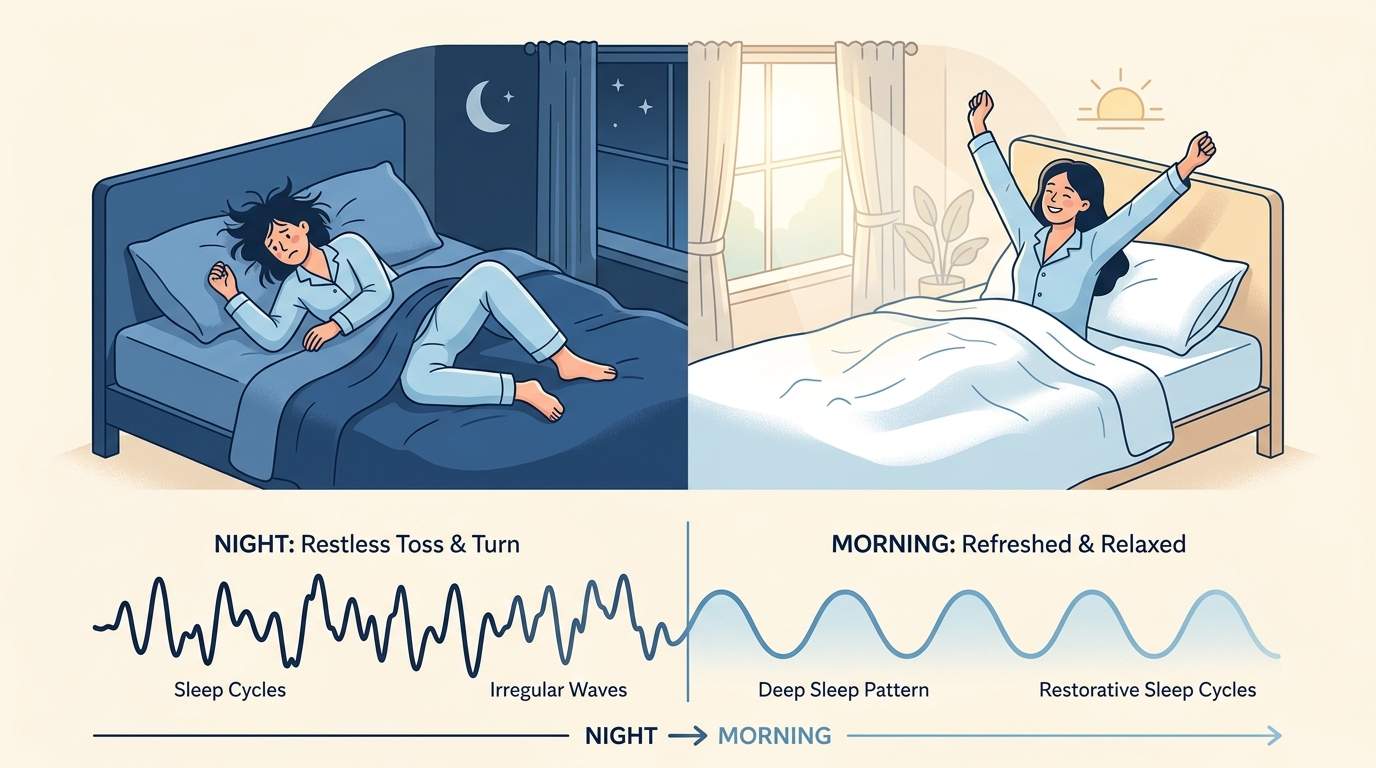
You know the feeling. On a gray, overcast morning, you drag yourself out of bed, stumble to the coffee maker, and spend the first hour of the day under artificial light. By noon, you are still sluggish, irritable, and reaching for a second cup of caffeine. Now contrast that with a bright, sunny morning where you step outside for a few minutes before breakfast. Somehow, the whole day feels different—more energy, clearer thinking, a lighter mood. This is not wishful thinking or placebo. It is neurochemistry. The human eye contains specialized photoreceptors that are not involved in vision at all. Their sole job is to detect blue-enriched morning light and signal the brain's master clock. That signal, in turn, triggers a cascade: it suppresses melatonin, elevates cortisol (the healthy awakening spike), and crucially, boosts dopamine—the neurotransmitter of motivation, reward, and focus. This is the morning sunlight dopamine effect, and it may be the single most accessible, evidence-based intervention for mood regulation and circadian health. The best part? It is free and requires nothing more than stepping outside.
E.g. :Why You Always Feel Tired After Lunch – And Why It’s Not “Digestion Stealing Your Blood Flow”
- 1、The Science of Morning Light: Retinal Ganglion Cells and the Master Clock
- 2、The Dopamine-Mood Connection: Why Light Lifts Your Spirits
- 3、Light Exposure Therapy: Practical Guidelines for Maximum Benefit
- 4、Synergistic Habits: Amplifying the Morning Light Effect
- 5、The Evening Counterpart: Protecting Melatonin
- 6、A Realistic Morning Protocol for Real People
- 7、The Takeaway
- 8、FAQs
The Science of Morning Light: Retinal Ganglion Cells and the Master Clock
To understand why morning light is uniquely powerful, you need to know about a recently discovered cell type: intrinsically photosensitive retinal ganglion cells (ipRGCs). Unlike rods and cones, which enable vision, ipRGCs contain a photopigment called melanopsin that is exquisitely sensitive to blue wavelength light (around 480 nm). When these cells are stimulated by morning light, they send a direct signal to the suprachiasmatic nucleus (SCN), the brain's master clock. The SCN then orchestrates the release of hormones and neurotransmitters throughout the body.
How Morning Light Resets the Circadian Clock
The SCN runs slightly longer than 24 hours. Without a daily reset signal, it would drift later and later, causing a condition called non-24-hour sleep-wake disorder. Morning light is the primary reset signal. It tells the SCN, "Day has begun." In response, the SCN halts melatonin production, raises body temperature, increases cortisol (the cortisol awakening response), and—crucially—promotes dopamine release in the ventral tegmental area and nucleus accumbens, brain regions central to motivation and reward. A 2017 study in Neuropsychopharmacology demonstrated that morning light exposure significantly increased dopamine synthesis in healthy volunteers, correlating with improved mood and alertness.
The Dopamine-Mood Connection: Why Light Lifts Your Spirits
Dopamine is often called the "feel-good" neurotransmitter, but that oversimplifies. More accurately, dopamine drives wanting, motivation, and effort-based decision-making. Low dopamine is associated with anhedonia (inability to feel pleasure), fatigue, and lack of drive. Morning sunlight dopamine release provides a natural, side-effect-free boost.
Light, Dopamine, and Seasonal Affective Disorder
Seasonal Affective Disorder (SAD) is a form of depression linked to reduced daylight in winter. The standard first-line treatment is bright light therapy (10,000 lux for 20-30 minutes each morning). A 2019 meta-analysis in The American Journal of Psychiatry found that light therapy was as effective as antidepressant medication for SAD, with fewer side effects. The mechanism is precisely the morning light-dopamine pathway. For individuals without clinical depression, morning light still produces measurable improvements in mood, energy, and cognitive performance.
Evidence from Office Workers and Students
A 2020 study in Sleep Health tracked office workers who were exposed to either morning sunlight or dim indoor light. Those who received morning sunlight reported significantly better sleep quality, lower depression scores, and higher daytime energy. Another study on university students found that those who sat near a window (receiving natural light) outperformed those in windowless classrooms on tests of attention and memory. The effect was mediated by morning light's impact on circadian timing and dopamine.
Light Exposure Therapy: Practical Guidelines for Maximum Benefit
Light exposure therapy does not require a prescription. It does require intentionality.
The 30-Minute Window
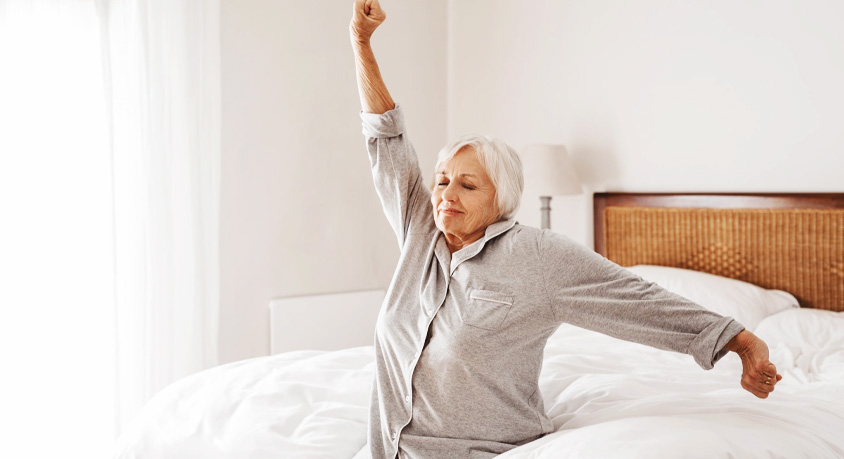
The most powerful window is within 30 minutes of waking. At this time, your circadian clock is most sensitive to light. Expose your eyes (not your skin) to natural daylight for 10-20 minutes. Do not wear sunglasses; they block the blue wavelengths that ipRGCs need. Do not look directly at the sun. Simply be outside, or sit by a large, unobstructed window. If you wear prescription glasses, clear lenses are fine; blue-blocking glasses would defeat the purpose.
What to Do on Cloudy Days or in Winter
Even an overcast sky provides 10,000-20,000 lux of light, far brighter than indoor lighting (typically 100-500 lux). On cloudy days, you still benefit. In very dark winter mornings, or if you wake before sunrise, use a light therapy lamp that emits 10,000 lux of cool-white light. Sit 16-24 inches from the lamp for 20-30 minutes while you eat breakfast or read. A sunrise alarm clock that gradually brightens over 30 minutes before your wake time can also help, though it is less potent than direct sunlight or a therapy lamp.
What to Avoid in the Morning
Do not wear blue light blocking glasses in the morning. These are for evening use only. Do not start your day on a screen in a dark room. The blue light from a phone or tablet is far less intense (around 50 lux) and does not provide the full-spectrum, high-intensity signal needed for dopamine release.
Synergistic Habits: Amplifying the Morning Light Effect
Morning light is most powerful when combined with other morning practices.
Light and Movement
Going outside for a walk combines light exposure with physical activity. Exercise itself increases dopamine and BDNF, and the two together may be synergistic. A 2018 study found that a 20-minute morning walk in sunlight improved mood more than either walking indoors or sitting in sunlight.
Light and Meal Timing
Eating breakfast after light exposure, rather than before, may enhance metabolic benefits. Morning light improves insulin sensitivity, and delaying breakfast until after light exposure aligns with your circadian peak in digestive function.
Light and Cold Exposure
Some biohackers combine morning light with a brief cold shower or cold face immersion. The cold activates the sympathetic nervous system and vagus nerve, while light sets the circadian clock. The combination may produce a powerful alerting effect.
The Evening Counterpart: Protecting Melatonin
To fully benefit from morning light exposure therapy, you must also manage evening light. Dopamine and melatonin are not directly antagonistic, but they are part of a coordinated rhythm. Bright evening light—especially blue-rich light from screens—suppresses melatonin and delays the circadian clock, making it harder to wake the next morning. This creates a vicious cycle: late nights lead to dark mornings, which reduce morning light exposure, which perpetuates the delay.
Simple Evening Rules
- Dim lights and shift to warm spectrum (2700K) 2 hours before bed.
- Wear blue light blocking glasses if you use screens in the evening.
- Avoid caffeine after 2 PM.
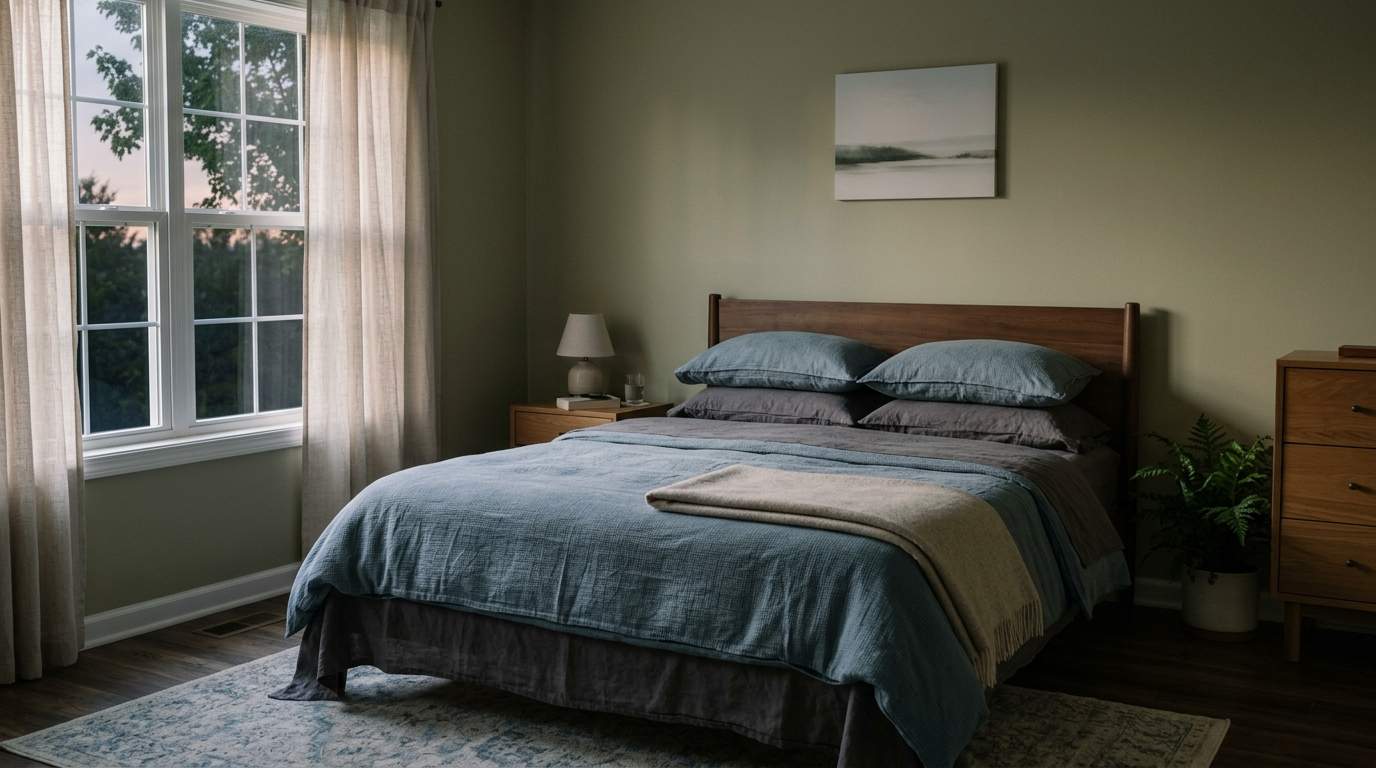
- Keep the bedroom completely dark (use blackout curtains and a sleep mask).
A Realistic Morning Protocol for Real People
You do not need to become a morning extremist. Small changes compound.
The Minimum Viable Dose
Step outside for 5 minutes within the first 30 minutes of waking. That is enough to start the dopamine cascade. Over time, work up to 15-20 minutes.
The No-Outside Option
If you cannot go outside (weather, safety, mobility), sit by a bright window or use a light therapy lamp. A sunrise alarm clock can ease the transition, though it is not a substitute for high-intensity light.
The Weekend Trap
Do not sleep in so late that you miss morning light. Even on weekends, try to get outside within an hour of waking. If you stay up late and sleep in, you will shift your clock later, making Monday morning harder.
The Takeaway
Modern life has imprisoned us indoors under artificial light. We wake to phone screens, commute in cars with tinted windows, and work in windowless offices. This is not just a matter of aesthetics; it is a metabolic and neurological deprivation. The solution is stunningly simple: step outside soon after waking. Let the morning sun—even through clouds—hit your eyes. That light will trigger a cascade of neurochemistry that elevates dopamine, resets your circadian clock, and lifts your mood for the rest of the day. No pill, no supplement, no app can replicate this ancient, free, and deeply effective therapy. Your brain evolved under the sun. Give it what it needs.
FAQs
Q: What if I wake up before sunrise? Should I still try to get light exposure?
A: If you wake before sunrise, use a light therapy lamp (10,000 lux) for 20-30 minutes immediately after waking. This simulates the effect of morning sunlight. After sunrise, if possible, step outside for additional natural light. Do not simply sit in indoor light or on a phone screen; the intensity is insufficient. A sunrise alarm clock can also help by gradually illuminating your room before you wake, reducing sleep inertia.
Q: Can I get the same dopamine effect from a light box if I live in a dark climate?
A: Yes. High-quality light therapy lamps (10,000 lux, 6500K color temperature) have been shown in multiple studies to effectively treat SAD and improve mood, energy, and circadian alignment. They are not quite as potent as natural sunlight (which can exceed 100,000 lux), but they are a excellent substitute. Use the lamp within 30 minutes of waking for 20-30 minutes, at a distance of 16-24 inches. Do not stare directly at the light; position it to the side.
Q: I wear prescription glasses. Should I remove them during morning light exposure?
A: If your glasses are clear (not tinted or blue-blocking), you can keep them on. They will not significantly reduce the beneficial light. If you wear transition lenses that darken in sunlight, you may want to step outside without them for a few minutes, or use a light therapy lamp indoors. The key is to allow blue wavelengths to reach your retina. Do not wear sunglasses or blue-blocking glasses in the morning. If you have an eye condition that makes you sensitive to bright light, consult your ophthalmologist before starting light therapy. Otherwise, enjoy the morning light benefits with open eyes.