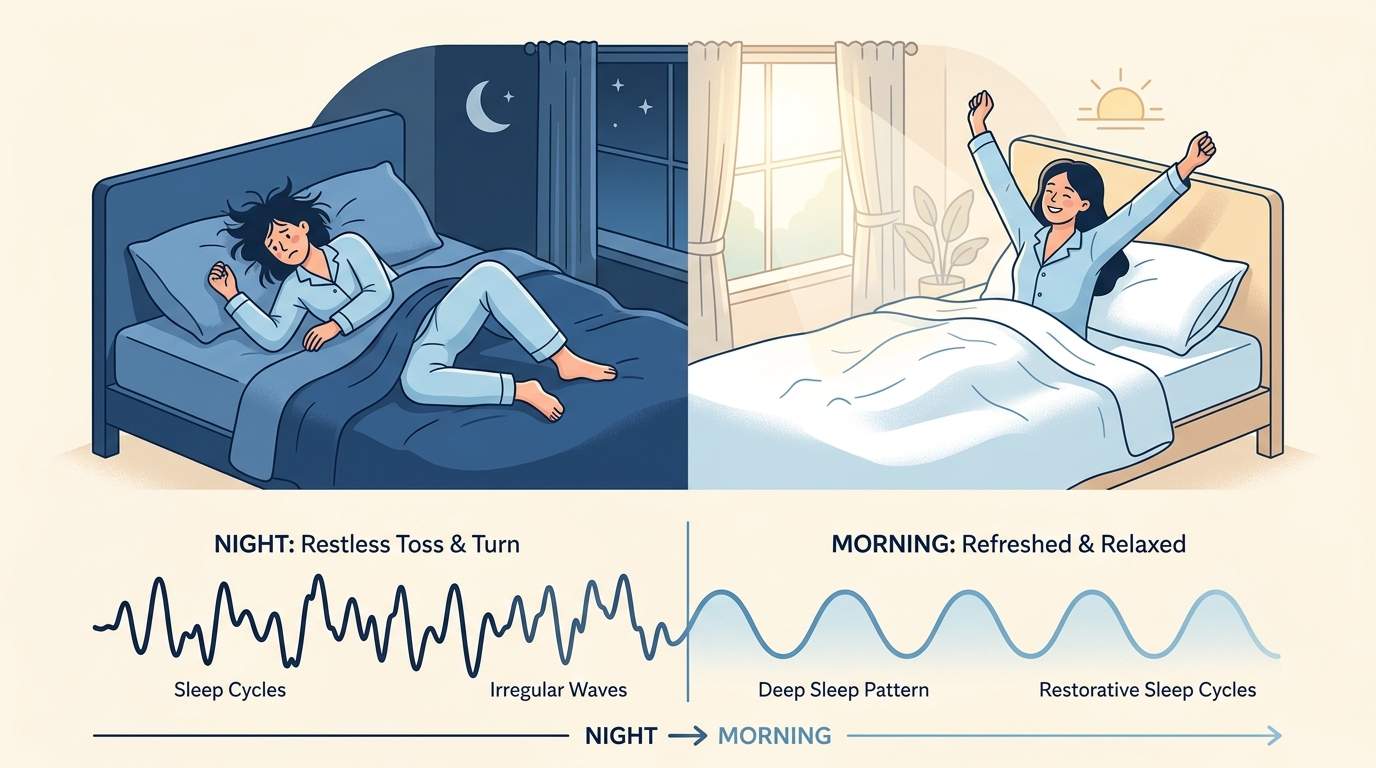
You stop drinking water two hours before bed. You even skip your evening tea. Yet every night, you wake up twice – sometimes three times – to use the bathroom. You drag yourself out of bed, shuffle to the toilet, and struggle to fall back asleep.
E.g. :Chronic Bloating Isn’t Just “Eating Too Much”—Permanently Relieve It by Fixing These Hidden Causes
- 1、Why Your Body Produces More Urine at Night Than It Should
- 2、The Swollen Ankle Connection – Fluid That Moves When You Lie Down
- 3、Bladder Capacity and Irritants – It’s Not Just Filling Speed
- 4、Practical Steps to Reduce Nighttime Urination Without Thirst
- 5、When Nocturia Signals Something Serious – Red Flags
- 6、FAQs
Most people assume this is simply from drinking too much fluid. So they restrict water aggressively. The result? They’re still waking up, now dehydrated and with a headache.
Here’s what’s rarely explained: nighttime urination often has nothing to do with how much you drink. The real causes involve your bladder’s capacity, your kidneys’ filtering patterns, and sometimes even sleep apnea or leg swelling. Restricting fluids treats the wrong problem.
Why Your Body Produces More Urine at Night Than It Should
Normally, your body produces an antidiuretic hormone (ADH) at night. This hormone tells your kidneys to concentrate urine, so you produce less of it while sleeping – allowing 6–8 hours of uninterrupted rest.
The Hormone Shift With Age
After age 50, natural ADH production often declines. Your kidneys also become less sensitive to ADH. A 2018 study in The Journal of Urology found that adults over 60 produce 30–50% more urine overnight compared to younger adults, even with identical fluid intake. This condition is called nocturnal polyuria – producing too much urine during sleep hours, regardless of daytime intake.
This is why cutting evening fluids often fails: your kidneys are simply making more urine, not because you drank more, but because their internal timing has changed.
The Swollen Ankle Connection – Fluid That Moves When You Lie Down
One of the most overlooked causes of nocturia is fluid retention in your legs.
How Gravity Works Against You
During the day, gravity pulls fluid downward, causing mild ankle swelling (especially after long periods of sitting or standing). When you lie down horizontally at night, that fluid returns to your bloodstream. Your kidneys detect the extra volume and produce urine to remove it – often 1–2 hours after you fall asleep.
A 2019 clinical study in European Urology showed that older adults with daytime leg edema who wore compression stockings reduced their nighttime bathroom trips by an average of 1.5 per night. The fluid never had a chance to re-enter the bloodstream at night because it was already managed during the day.
If you notice sock marks on your ankles or shoes feeling tight by evening, this mechanism may be driving your nocturia – not your water intake.

Bladder Capacity and Irritants – It’s Not Just Filling Speed
Even if your kidneys produce normal urine volume, a small or overactive bladder will force you to wake up sooner.
Common Bladder Irritants
- Caffeine (coffee, tea, soda) – stimulates bladder muscle contractions.
- Alcohol – suppresses ADH and irritates the bladder lining.
- Acidic foods (tomatoes, citrus, spicy dishes) – can trigger urgency in sensitive individuals.
- Artificial sweeteners – some studies link them to bladder overactivity.
A 2020 review in Neurourology and Urodynamics found that eliminating these irritants for four weeks reduced nighttime voids by 40% in people with overactive bladder symptoms – without changing fluid volume.
Practical Steps to Reduce Nighttime Urination Without Thirst
Stop punishing yourself with fluid restriction. Try these evidence-based fixes first.
1. Elevate Your Legs During the Day
For 1–2 hours in the late afternoon, sit with your legs elevated above heart level. This encourages fluid to return to your bloodstream and be processed as urine before bedtime, not during sleep.
2. Shift Your Salt Intake
High sodium intake increases total body water and nighttime urine production. A 2017 study in The Journal of Nutrition found that reducing dietary salt from 9g to 6g per day decreased nighttime urination by an average of 1.2 episodes per night. Cook more at home, limit processed foods.
3. Double-Void Before Bed
Empty your bladder, wait 30 seconds, then try again. This “double void” technique empties residual urine that can otherwise trigger an early wake-up.
4. Strengthen Pelvic Floor Muscles
Pelvic floor exercises (Kegels) help bladder control. A 2021 trial showed that 12 weeks of daily pelvic floor training reduced nocturia episodes by 35% in men and women over 55. Squeeze as if stopping urine flow, hold 5 seconds, relax 5 seconds. Do 10 repetitions, three times daily.
When Nocturia Signals Something Serious – Red Flags
Sometimes waking to pee is a symptom of an underlying medical condition, not a bladder problem.
Conditions That Cause Nocturia
- Sleep apnea – Interrupted breathing triggers a hormonal response that increases urine production. Treating apnea often cures nocturia.
- Diabetes (type 1 or 2) – Excess sugar in the blood spills into urine, pulling water with it.
- Heart failure – Poor pumping efficiency causes fluid to pool in legs during the day, then return to circulation at night.
- Enlarged prostate (men) – Obstructs bladder emptying, reducing functional capacity.
If you wake up needing to pee three or more times per night, or if you also snore loudly, wake with headaches, or have swollen feet, see your doctor. A simple urine test and morning blood work can rule out diabetes and kidney issues.
FAQs
Q: Is it normal to wake up once per night to pee after age 50?
A: Yes. One nighttime void is generally considered normal for older adults. Two or more voids that disturb sleep (not just light sleepers) warrant investigation. The threshold for “nocturia” is two or more episodes per night.
Q: Can bladder training reduce nighttime urination?
A: Yes, but slowly. During the day, hold your urine for an extra 15–30 minutes when you feel the urge. This gradually increases functional bladder capacity. Do not do this at night – waking to hold urine disrupts sleep more than peeing.