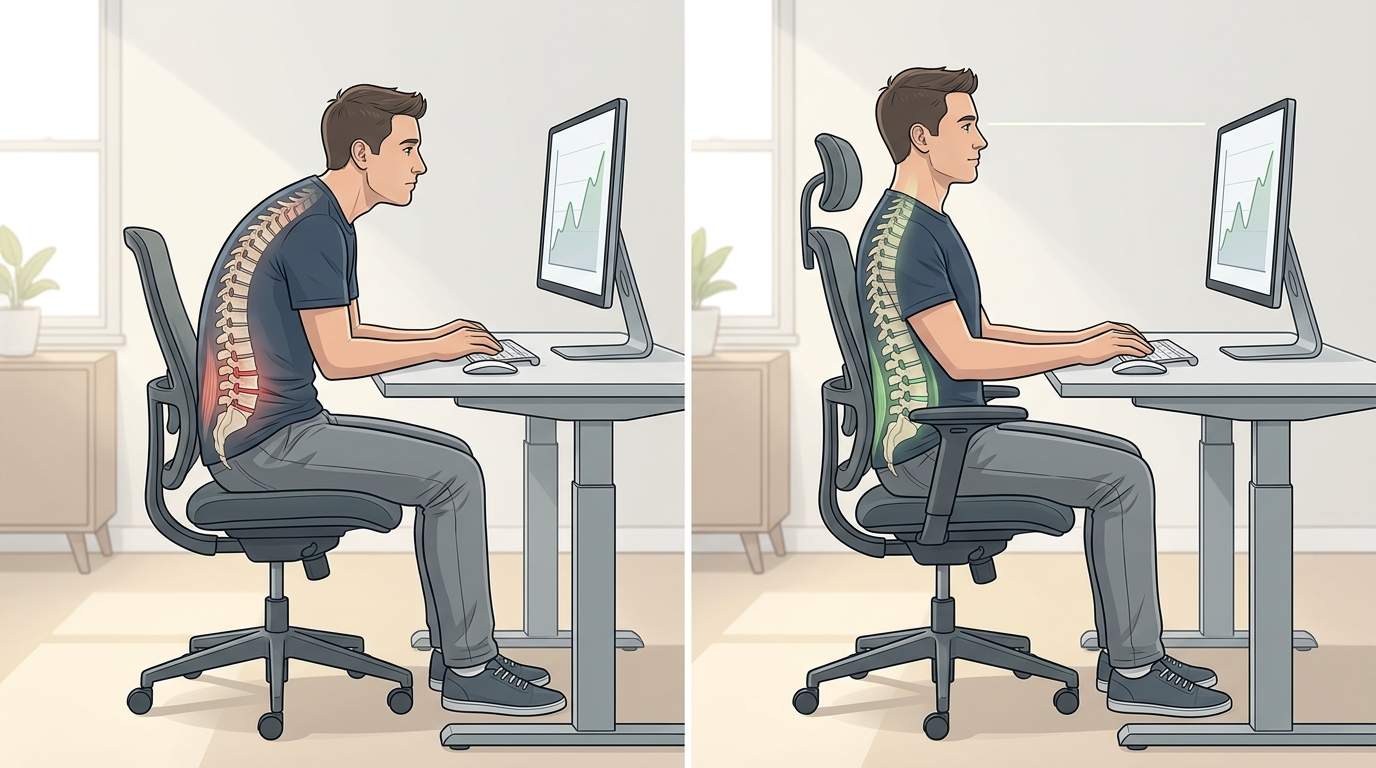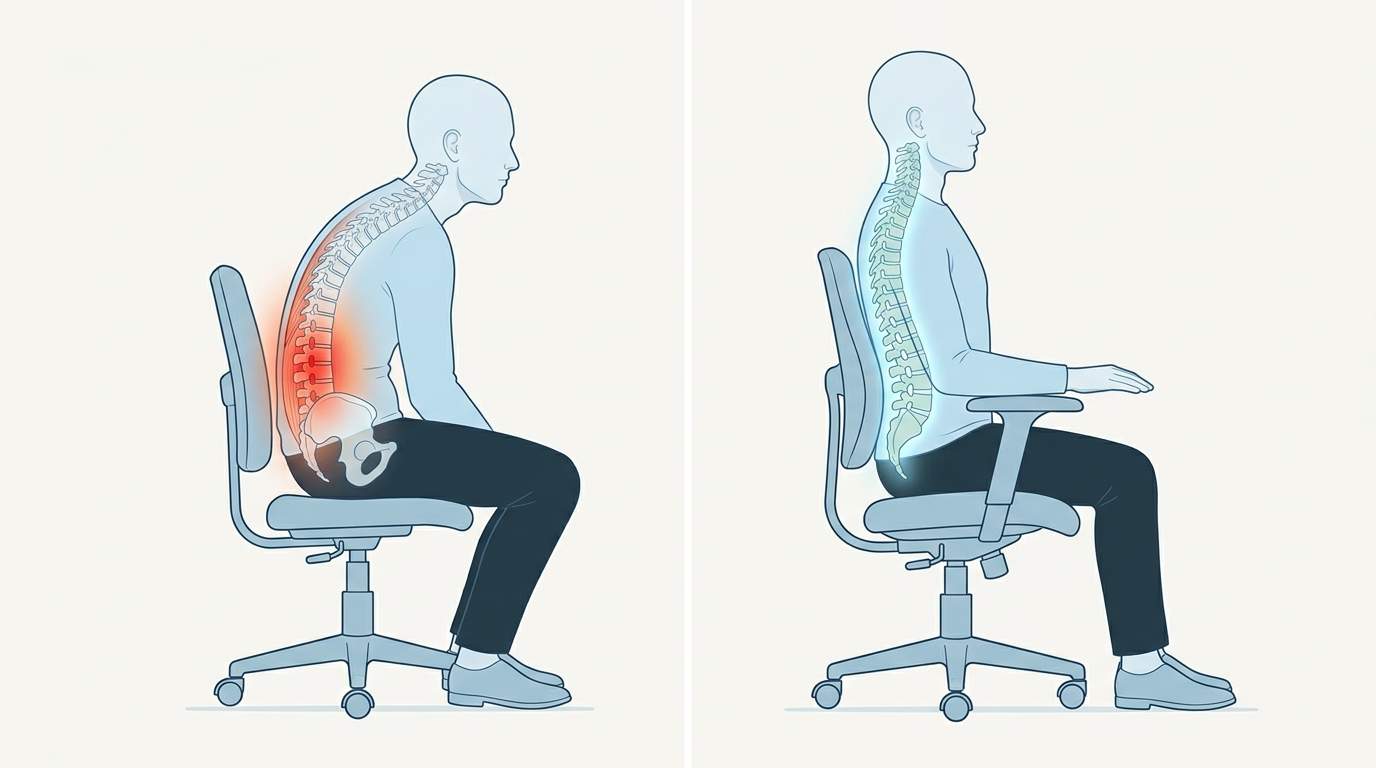
Imagine wrapping up another long day at your desk, only to feel that familiar twinge in your lower back as you stand up. It's not just you—millions navigate this quiet discomfort daily, chalking it up to "poor posture" or "too much sitting." Yet, as someone who's spent years dissecting the biology of everyday aches through lenses of biomechanics and preventive health, I've seen how these moments signal deeper imbalances. Let's unpack why prolonged sitting triggers lower back pain and reveal the structured path to reclaiming ease in your movements.
- 1、Lower Back Pain from Prolonged Sitting: The Hidden Daily Toll on Desk Workers
- 2、Why Stretching Alone Fails to Ease Desk Job Back Pain
- 3、Core Strengthening Exercises: Science-Backed Fix for Lower Back Pain
- 4、Integrating Core Strengthening Exercises into Prolonged Sitting Routines
- 5、Long-Term Prevention of Lower Back Pain from Desk Job Habits
- 6、FAQs
Lower Back Pain from Prolonged Sitting: The Hidden Daily Toll on Desk Workers
That nagging ache isn't random; it's your body's alarm for instability. Prolonged sitting compresses the lumbar spine, weakening the core muscles that act as its natural brace. According to the Centers for Disease Control and Prevention (CDC), about 40% of working adults report lower back pain annually, with desk-bound professionals hit hardest—sedentary jobs double the risk compared to active ones, per a 2022 study in the journal Occupancy, Environment and Medicine.
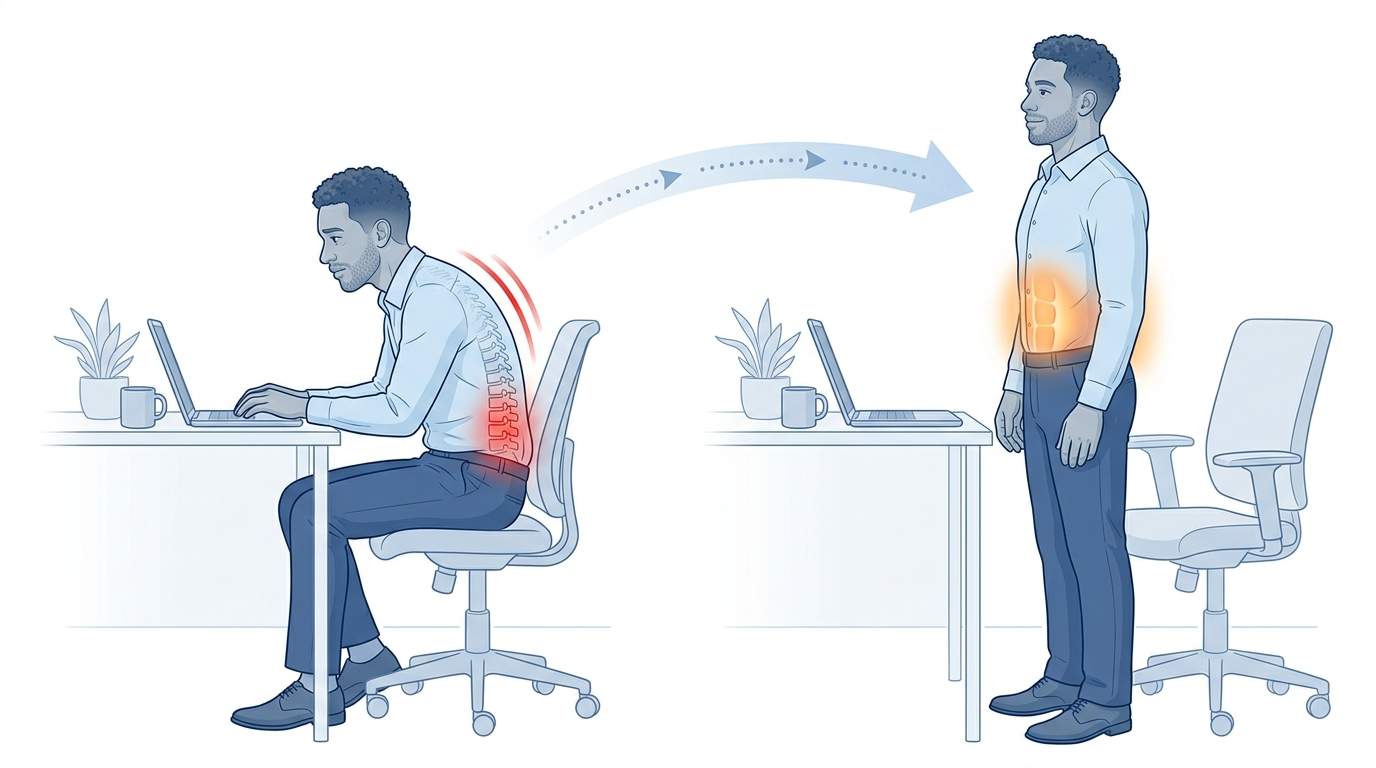
I remember a client, Sarah, a marketing exec in her 30s, who powered through 10-hour screen days with gritted teeth. Her story mirrors so many: the pain started subtly after pandemic remote work boomed, escalating until simple tasks like tying shoes felt daunting. We all deserve better than enduring this—it's not inevitable, and understanding the "why" empowers real change.
Why Stretching Alone Fails to Ease Desk Job Back Pain
Everyone swears by stretches for lower back pain relief, but here's a question that challenges the norm: Why do some people feel worse after stretching? The consensus push for quick bends overlooks that tight muscles often compensate for weak ones beneath. A randomized trial in Spine Journal (2018) showed static stretching provided short-term relief but no lasting gains for chronic lower back pain from prolonged sitting—participants' pain returned within weeks without strength building.
Stretch if it feels good momentarily, but don't stop there. Your lower back cries out because sedentary hours deactivate deep stabilizers like the transversus abdominis, leaving vertebrae unsupported. I get the frustration; you've tried the cat-cow pose religiously, yet the desk job back pain lingers. True relief demands addressing the root: rebuilding that core scaffold.
The Compensation Cycle in Prolonged Sitting
When cores weaken from sitting too much, hip flexors shorten and pull the pelvis forward, exaggerating lumbar curve. This isn't fixed by loosening alone—it's a stability deficit screaming for reinforcement.
Core Strengthening Exercises: Science-Backed Fix for Lower Back Pain
Now, the pivot: Why does fortifying your core trump surface fixes? Core muscles—think multifidus, obliques, and pelvic floor—form a dynamic cylinder around the spine, distributing loads during every shift. Research from the American College of Sports Medicine (ACSM) confirms that 8 weeks of core strengthening exercises cut lower back pain incidence by 30-50% in office workers, outperforming stretching or meds (per a meta-analysis in British Journal of Sports Medicine, 2020).
This isn't guesswork; it's biomechanics. Prolonged sitting slashes core activation by 70%, per electromyography studies from the University of Waterloo. Strengthen them, and you restore spinal neutrality—pain fades as your body relearns efficient movement. You're not just exercising; you're rewiring for resilience.
Top Core Strengthening Exercises for Desk Job Back Pain
Start with planks: Hold 20-30 seconds, building to 1 minute, 3 sets daily. They fire 100% of core fibers, stabilizing without spinal flexion. Next, bird-dogs: On all fours, extend opposite arm and leg—hold 10 seconds per side. A Journal of Strength and Conditioning Research study found these boost lumbar endurance by 25%.
Dead bugs round it out: Lie on back, alternate lowering limbs slowly. Perfect for beginners, they mimic anti-rotation needed against desk slumps.
Integrating Core Strengthening Exercises into Prolonged Sitting Routines
Challenge another assumption: Must gym time be lengthy? No—micro-habits win for busy lives. Set a timer for 5-minute core bursts every 2 hours: desk planks against your chair, or seated leg lifts engaging deep abs. The National Institute for Occupational Safety and Health (NIOSH) endorses this; breaking sitting with activation cuts lower back pain risk by 20%.
Sarah transformed by weaving these in—posture improved naturally, pain vanished after a month. Feel that spark of possibility? You're capable; it's about consistent, bite-sized logic that compounds.
Long-Term Prevention of Lower Back Pain from Desk Job Habits
Sustained freedom hinges on a closed loop: Assess (track pain triggers), Activate (daily cores), Adapt (ergonomic tweaks like 90-degree knees). Why does this endure? Cores gain endurance, reducing fatigue from prolonged sitting by enhancing proprioception—your body's position sense.
A Harvard Health review (2023) notes lifestyle interveners like these slash recurrence by 45%. Prioritize this, and lower back pain becomes history, not habit. You've got the insight—now claim the vitality you deserve.
FAQs
Q: How soon can I expect relief from lower back pain with core strengthening exercises?
A: Many notice reduced desk job back pain within 2-4 weeks of consistent practice, backed by clinical trials showing 20-30% improvement in pain scores early on. Pair with posture checks for faster results.
Q: Is prolonged sitting the only cause of my lower back pain?
A: It's a major contributor for desk workers, but weak cores amplify it. A CDC survey links it to 80% of cases in sedentary adults—strengthening addresses the common thread.
Q: Can I do core strengthening exercises if I'm new to fitness?
A: Absolutely—start modified, like wall planks. Studies in Physical Therapy confirm beginners safely gain benefits, building confidence without overwhelm.