The transition from the golden warmth of late summer to the crisp, descending temperatures of autumn often brings a subtle yet unsettling ritual for many. It begins at the bathroom sink or on the fabric of a favorite sweater—small, wispy strands of hair that seem to have abandoned their post. For most, this sight triggers a localized panic. We reach for thickening shampoos, double our intake of over-the-counter vitamins, or perhaps stop washing our hair altogether in a desperate bid to keep what remains attached. This visceral reaction is understandable, yet it often misses the profound biological logic operating beneath the surface. As we navigate these seasonal shifts, it is essential to understand that your hair is not simply "falling out"; it is responding to an ancient evolutionary clock.
E.g. :Thin Skin, Deep Trouble: What Papery Wrinkles Reveal About Your Biological Clock
- 1、The Biological Calendar Behind Seasonal Hair Loss and Why Your Follicles Are Synchronizing
- 2、Why Frequent Hair Washing Does Not Cause Thinning and How Scalp Hygiene Maintains Growth Density
- 3、The Role of the Scalp Microbiome in Follicular Health
- 4、Moving Beyond Biotin Supplements to Address Real Nutritional Deficiencies in Hair Health
- 5、Managing Cortisol Levels to Prevent Stress Induced Telogen Effluvium During Life Transitions
- 6、Creating a Sustainable Scalp Care Routine Based on Biological Logic Instead of Marketing Trends
- 7、FAQs
- 8、Q: How can I tell the difference between normal seasonal shedding and a more serious condition?
- 9、Q: Will cutting my hair shorter make it grow back thicker or stop the shedding?
- 10、Q: Can specific foods immediately stop hair from falling out during the change of seasons?
The Biological Calendar Behind Seasonal Hair Loss and Why Your Follicles Are Synchronizing
To understand why hair shedding intensifies during specific months, we must look at the hair growth cycle not as a static state, but as a dynamic, staggered process. At any given moment, approximately 85 to 90 percent of your hair is in the Anagen (growth) phase, while the remainder resides in the Telogen (resting) phase. Research published in the British Journal of Dermatology (2010) tracked women over six years and found a distinct periodicity to hair shedding. The study revealed that the proportion of hair in the telogen phase consistently peaks in July and again in the transition to autumn.
This phenomenon suggests a photoperiodic response—a biological reaction to the changing length of daylight. In the summer, the body may retain more hair to protect the scalp from ultraviolet radiation. As daylight wanes, the body receives a signal to release these hairs, leading to a synchronized shedding event. This is not a failure of the follicle; it is a recalibration. When we see an increase in shedding, we are often witnessing the "eviction notice" for hairs that actually entered the resting phase weeks or even months prior.
Understanding the Telogen Phase Transition
The transition from growth to rest is governed by complex signaling proteins. When the environment changes, the body prioritizes essential functions. While hair is aesthetically vital to us, biologically, it is non-essential tissue. If the body perceives a shift in temperature or light as a minor stressor, it may prematurely usher more follicles into the telogen phase. This is why "fixing" the problem with a topical oil in October is often ineffective—the decision to shed that particular hair was made by your biology back in August.
Why Frequent Hair Washing Does Not Cause Thinning and How Scalp Hygiene Maintains Growth Density
One of the most persistent misconceptions in hair health is the belief that frequent washing accelerates hair loss. Many individuals, noticing more strands in the drain, respond by extending the time between washes. This is a logical fallacy based on correlation rather than causation. The hair that falls out during a wash was already detached from the dermal papilla; the mechanical action of washing simply cleared away what was already gone.
In reality, avoiding the shower can be counterproductive to long-term hair density. The scalp is a unique ecosystem, rich in sebaceous glands. When we decrease washing frequency, we allow for the accumulation of sebum, dead skin cells, and environmental pollutants. This creates a pro-inflammatory environment that can disrupt the scalp microbiome.
The Role of the Scalp Microbiome in Follicular Health
Recent studies in the Journal of Cosmetic Dermatology emphasize that an imbalanced scalp microbiome—specifically an overgrowth of Malassezia species—can lead to micro-inflammation around the follicular opening. This inflammation can shorten the anagen phase over time, leading to thinner strands. Therefore, maintaining a clean, balanced scalp environment is not about "saving" the hairs that are currently shedding, but about ensuring the next generation of hair has a healthy foundation in which to grow.
Moving Beyond Biotin Supplements to Address Real Nutritional Deficiencies in Hair Health
The global supplement industry has positioned Biotin (Vitamin B7) as a panacea for all hair woes. However, for the average individual eating a balanced diet, Biotin deficiency is exceedingly rare. Loading the system with excess Biotin rarely results in increased hair growth because the body simply excretes what it does not need. To find the "why" behind poor hair quality, we must look deeper at iron stores and Vitamin D levels.
Hair follicle cells are among the most rapidly dividing cells in the body. This high metabolic rate requires a constant supply of energy and specific co-factors. Ferritin, the protein that stores iron, is a critical component here. According to research from the Cleveland Clinic, low serum ferritin levels are frequently linked to telogen effluvium, even if the individual is not clinically anemic.
The Role of Vitamin D and Iron in Follicular Regeneration
Vitamin D acts more like a hormone than a vitamin in the context of hair health. It is involved in the differentiation of keratinocytes, the cells that make up the hair shaft. During the autumn and winter months, as our sun exposure drops, so do our Vitamin D levels. This can lead to a sluggish transition from the resting phase back into the growth phase. Instead of reaching for a generic "hair, skin, and nails" gummy, the logical approach involves clinical testing of ferritin and Vitamin D3 levels to address the actual physiological bottlenecks.
Managing Cortisol Levels to Prevent Stress Induced Telogen Effluvium During Life Transitions
The relationship between our psychological state and our hair is mediated by the "brain-hair axis." When we experience chronic stress—whether from work, seasonal affective changes, or the anxiety of seeing hair loss itself—the body releases cortisol. High levels of cortisol have been shown to degrade skin elements like hyaluronan and proteoglycans, which support the hair follicle.
This creates a feedback loop: the stress of shedding causes more shedding. To break this cycle, we must recognize that hair health is a lagging indicator of our overall well-being. The hair you see today is a reflection of your internal state three months ago. By focusing on systemic stress management and nervous system regulation, we provide the biological safety the body needs to keep the "growth" signals active.
Creating a Sustainable Scalp Care Routine Based on Biological Logic Instead of Marketing Trends
Rather than chasing "miracle" ingredients, a structured approach to hair health focuses on two goals: reducing inflammation and supporting blood flow. Scalp massage, for instance, is often dismissed as a mere relaxation technique. However, a study published in Eplasty demonstrated that standardized scalp massage increased hair thickness by inducing stretching forces on the dermal papilla cells, which changed gene expression related to hair growth.
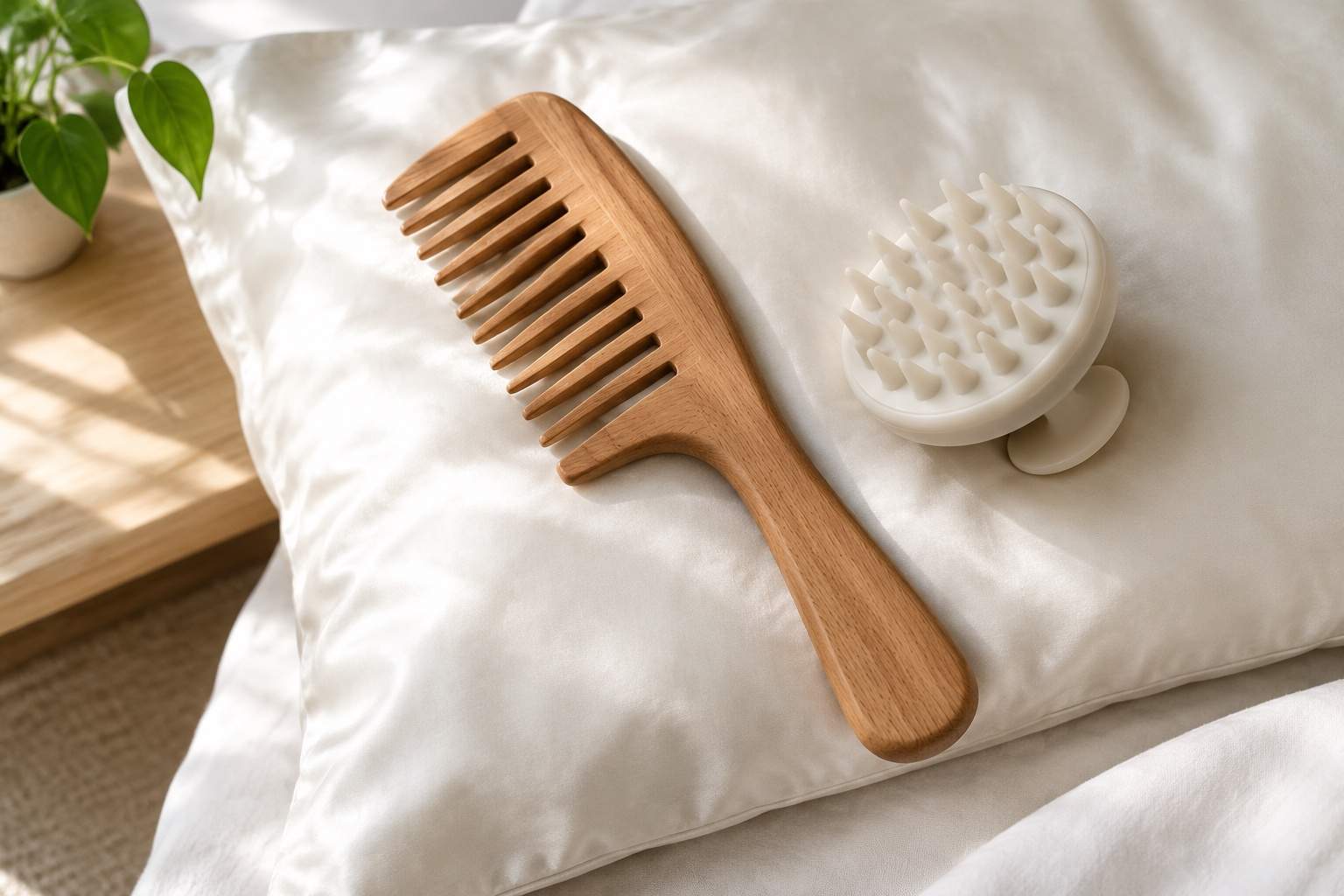
The logic is simple: blood carries oxygen and nutrients. By physically stimulating the scalp and using tools like a scalp exfoliating brush to remove debris, we optimize the environment for the new anagen hairs that are currently forming beneath the surface. This is a long-game strategy. It requires the patience of a gardener who understands that the health of the bloom depends entirely on the quality of the soil and the consistency of the care, even when the ground appears bare.
FAQs
Q: How can I tell the difference between normal seasonal shedding and a more serious condition?
A: Normal seasonal shedding, often a form of telogen effluvium, typically involves a general thinning across the entire scalp rather than localized bald spots. You might notice a higher volume of hair in your brush or shower, but the "hair pull test"—gently tugging about 40-60 hairs—should only result in a few strands coming out. If you see redness, scaling, or patches of total hair loss, these are clinical signs that require a consultation with a dermatologist to rule out autoimmune or fungal issues.
Q: Will cutting my hair shorter make it grow back thicker or stop the shedding?
A: This is a common optical illusion. Cutting the hair does not affect the follicle located 4mm beneath the scalp surface. However, shorter hair exerts less mechanical weight on the follicle and is less prone to breakage from tangling. While it won't stop the biological shedding process, it can make the hair appear more voluminous and reduce the visual impact of seeing long strands in the drain, which can help lower the psychological stress associated with hair loss.
Q: Can specific foods immediately stop hair from falling out during the change of seasons?
A: Biology does not work in "immediacy" regarding hair. Because the hair shaft is dead tissue once it leaves the scalp, changes in diet take 3 to 6 months to manifest in the visible hair. To support the growth of the next cycle, prioritize bioavailable proteins and Omega-3 fatty acids found in salmon, walnuts, and eggs. These provide the structural lipids and amino acids (like L-lysine) necessary for building a strong keratin matrix in the new hair currently being synthesized.