The morning routine for many is a predictable, almost meditative ritual. You stand before the mirror, apply a ribbon of toothpaste, and brush for the recommended two minutes. But as you spit into the porcelain sink, you notice a faint pink tint in the foam. Most people glance at it, perhaps feel a momentary twinge of concern, and then dismiss it. They tell themselves they simply brushed a bit too hard or that their gums are "sensitive" due to the changing weather.
E.g. :White Spots on Teeth Aren’t Calcium – The First Sign of Decay You’re Ignoring
- 1、The Biological Signal Behind Bleeding Gums and Gingivitis
- 2、Why Mechanical Force Is Not the Primary Cause of Gum Disease
- 3、Challenging the Pain Myth in Oral Health and Inflammation
- 4、The Connection Between Gum Health and Systemic Wellness
- 5、Long-term Strategies for Managing the Oral Microbiome
- 6、FAQs
- 7、Is it okay to stop flossing if my gums bleed every time I do it?
- 8、Can a professional cleaning fix bleeding gums permanently?
- 9、Does using an antibacterial mouthwash replace the need for flossing?
However, as we peel back the layers of clinical biology, that small trace of blood is rarely a mechanical accident. It is a biological SOS. As a health writer who has spent years examining the intersection of preventive medicine and microbiology, I have observed that we often treat the mouth as an isolated chamber, separate from the rest of our physiology. In reality, the state of your gums is a window into your immune system’s frontline battles. To understand why your gums bleed, we must look past the toothbrush and into the microscopic world of the oral microbiome.
The Biological Signal Behind Bleeding Gums and Gingivitis
When we see blood after brushing, the most common instinct is to blame the tool. We assume the bristles were too stiff or the hand too heavy. While aggressive brushing can cause physical trauma, the vast majority of bleeding is symptomatic of gingivitis—the earliest stage of gum disease. This isn't just a surface-level irritation; it is an inflammatory response to a sophisticated biological structure known as a biofilm.
The mouth is home to billions of bacteria. When these microorganisms are not effectively disrupted, they organize into a sticky, colorless film called plaque. If left undisturbed, this community matures into a complex fortress. Your body perceives this bacterial accumulation as an invasion. To fight back, the immune system sends an increased flow of blood and white molecules to the area. This makes the gum tissue engorged, fragile, and prone to bleeding at the slightest touch. According to the Centers for Disease Control and Prevention (CDC), nearly 47.2% of adults aged 30 and older have some form of periodontal disease. This statistic highlights a fundamental disconnect between our cleaning habits and biological reality.
Why Mechanical Force Is Not the Primary Cause of Gum Disease
It is time to challenge a pervasive myth: that bleeding is "normal" if you haven't flossed in a while or if you are using a new brush. In a state of health, gum tissue is remarkably resilient; it should be able to withstand the friction of a standard cleaning without hemorrhaging. If it bleeds, the integrity of the tissue has already been compromised by underlying inflammation.
The Role of Microbial Biofilms
To truly understand the "why," we must look at the nature of the biofilm. Bacteria in the mouth do not exist as solitary drifters; they build a protective matrix that shields them from both your saliva’s natural enzymes and the chemicals in mouthwash. This is why a quick rinse is never a substitute for mechanical disruption. When this biofilm is allowed to sit at the gingival margin (where the tooth meets the gum), it begins to release metabolic byproducts that dissolve the tiny fibers holding the gum to the tooth. The bleeding you see is the result of your capillaries being pushed to the surface by an inflammatory swell, making them vulnerable to even the gentlest pressure.
Challenging the Pain Myth in Oral Health and Inflammation
One of the most dangerous misconceptions in health management is the "pain-proxy" fallacy—the idea that if something doesn't hurt, it isn't a problem. Unlike a cavity, which eventually hits a nerve and sends a sharp warning, gum disease is often a silent progression. This silence is what allows gingivitis to transition into periodontitis, where the bone supporting the teeth begins to recede.
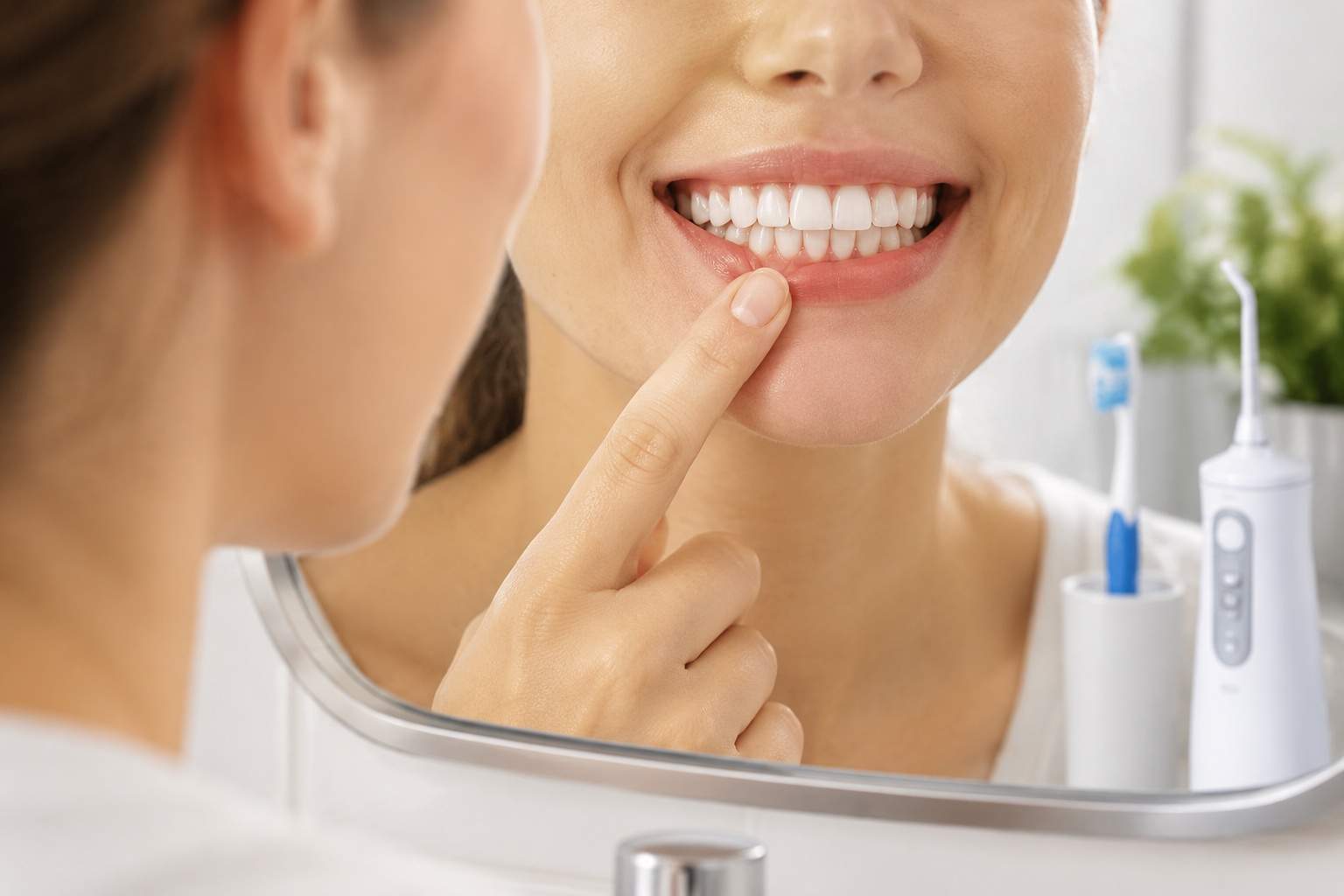
The lack of pain is a result of the body’s attempt to adapt to chronic inflammation. Your immune system shifts from an acute "attack" mode to a low-grade, persistent "defense" mode. This chronic state is actually more taxing on your overall health than an acute infection. We must stop using pain as our primary metric for oral care and start using visual cues—like color, texture, and bleeding—as our early warning system. Healthy gums should be pale pink and "stippled" (looking slightly like the skin of an orange), not shiny, red, or swollen.
The Connection Between Gum Health and Systemic Wellness
If the implications of bleeding gums were confined to the mouth, it might be a minor inconvenience. However, the logic of preventive medicine dictates that an inflammatory fire in one part of the body will eventually affect the whole. The "leaky gum" hypothesis suggests that when gum tissue is inflamed and bleeding, the protective barrier between your oral cavity and your bloodstream is breached.
Chronic Inflammation and Cardiovascular Risks
Research has increasingly pointed toward a correlation between periodontal health and heart health. A landmark study published in the Journal of the American Heart Association suggested that the bacteria involved in gum disease can enter the bloodstream and contribute to the formation of arterial plaque. This isn't to say that gum disease causes heart attacks directly, but rather that it contributes to the "total inflammatory load" of the body. When your immune system is constantly fighting an infection in your mouth, it creates a systemic environment of high inflammation, which is a known risk factor for cardiovascular disease and diabetes. By addressing the bleeding in your sink, you are essentially cooling down an inflammatory fire that could otherwise spread through your vascular system.
Long-term Strategies for Managing the Oral Microbiome
Knowing that the problem is a biological biofilm rather than just "food stuck in teeth" changes how we must approach the solution. Effective management requires a shift from "cleaning" to "disrupting." We are not trying to sterilize the mouth—which would be impossible and harmful—but rather to keep the bacterial communities in a state of youthful, non-pathogenic growth.
Precision Tools for Biofilm Disruption
This is where the logic of specific tools comes into play. A water flosser, for instance, is not just a fancy gadget; it uses hydraulic pressure to disrupt biofilms in deep pockets where traditional floss cannot reach. Similarly, switching to a soft-bristle brush is not about being "gentle" to a weak area; it is about using bristles that are flexible enough to reach slightly under the gum line where the most dangerous bacteria reside.
Furthermore, we must look at the role of the oral microbiome's environment. Diets high in refined sugars provide the exact fuel that inflammatory bacteria need to build their biofilm fortresses. Conversely, a diet rich in fibrous vegetables and antioxidants supports the body’s ability to manage inflammation from the inside out. It is a dual approach: mechanical disruption from the outside and nutritional support from the inside.
As you move forward, I encourage you to see your oral health not as a chore of vanity, but as a critical component of your longevity strategy. The next time you see that hint of pink in the sink, don't ignore it. Acknowledge it as a signal from a complex biological system asking for a change in strategy. Your heart, your immune system, and your future self will thank you for listening.
FAQs
Is it okay to stop flossing if my gums bleed every time I do it?
Actually, that is the most important time to continue, albeit gently. Bleeding is a sign of active inflammation caused by plaque that hasn't been removed. If you stop cleaning that area, the bacteria will continue to multiply, worsening the inflammation and leading to bone loss. With consistent, gentle disruption of the biofilm, the bleeding should subside within 7 to 10 days as the tissue heals.
Can a professional cleaning fix bleeding gums permanently?
A professional dental cleaning is essential for removing "tartar" or calculus—plaque that has mineralized and cannot be brushed away. However, it is not a permanent fix. Biofilm begins to reform within hours of a cleaning. Think of a professional cleaning as a "system reset." To keep the gums from bleeding again, you must maintain daily disruption of the bacteria through proper brushing and flossing techniques.
Does using an antibacterial mouthwash replace the need for flossing?
No. Because bacteria live in a "biofilm" (a protective slime layer), chemicals like those in mouthwash often cannot penetrate deep enough to kill the microorganisms at the base of the colony. Mechanical disruption—physically scraping or wiping the film away with floss or a brush—is the only way to effectively break down these structures. Mouthwash is a helpful adjunct, but it cannot do the "heavy lifting" of biofilm removal.