You squeeze toothpaste onto your brush, scrub for two minutes, rinse the bristles under hot water, and snap the brush back into its holder on the bathroom counter. It sits there, inches from the toilet, waiting for tonight’s second brushing.
E.g. :Your Eyes Feel Dry and Tired After Screens – Eye Drops Alone Won’t Fix It
- 1、The Flume That Changes Everything: Toilet Aerosols
- 2、The Real Bacterial Load: Not Just From the Toilet
- 3、The “Rinse Under Water” Illusion
- 4、What Contamination Means for Your Health
- 5、How to Store Your Toothbrush Without Collecting Bacteria
- 6、A Simple Test: Smell Your Toothbrush
- 7、FAQs
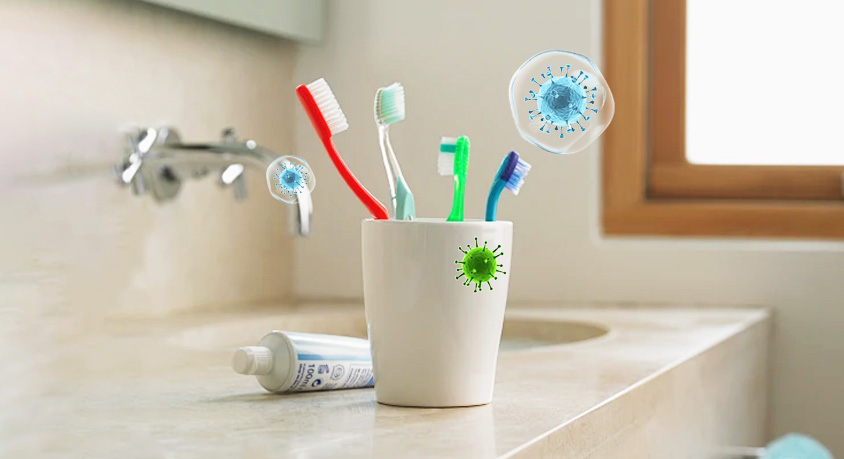
That holder looks clean. The bristles look clean. But every time you flush with the lid open, a fine mist of water droplets—laden with bacteria—settles onto every surface in your bathroom. Including your toothbrush.
What you can’t see is what matters most. And what’s growing on those bristles might explain those repeated colds, that lingering bad breath, or those gums that never seem to heal.
The Flume That Changes Everything: Toilet Aerosols
When you flush a toilet, water and waste collide at high speed. The resulting plume of aerosolized particles can reach heights of 4 to 6 feet and linger in the air for up to two hours. A 2020 study in Infection & Hospital Epidemiology used green fluorescent protein to trace aerosol spread. Contaminated droplets landed on surfaces throughout the bathroom—including toothbrushes stored on open counters.
If the toilet lid is up, those droplets contain fecal bacteria like E. coli, Klebsiella, and even Streptococcus. One flush releases hundreds of thousands of bacteria into the air. Your toothbrush acts as a passive collector, gathering what you cannot see.
The Real Bacterial Load: Not Just From the Toilet
Toothbrushes don’t only collect toilet aerosols. They also harbor bacteria from your own mouth. After brushing, millions of oral microbes remain trapped between bristles. These include Streptococcus mutans (cavities), Porphyromonas gingivalis (gum disease), and Candida albicans (fungal overgrowth).
A 2017 study in the Journal of Clinical Dentistry examined used toothbrushes from 100 healthy adults. Every single brush contained bacteria. Over 60% grew coliform bacteria (normally found in feces). The authors concluded that toothbrushes serve as “reservoirs for both oral and environmental microorganisms, with potential for cross-infection.”
The problem multiplies when multiple toothbrushes are stored in the same holder, bristles touching. Family members exchange each other’s bacteria, including pathogens from one person’s active infection.
The “Rinse Under Water” Illusion
Most people assume that running tap water over bristles cleans them. It doesn’t. Water alone cannot remove biofilm, the sticky matrix that bacteria secrete to attach to surfaces. Biofilm forms within hours on damp bristles.
A 2019 experiment in The Open Microbiology Journal tested toothbrush cleaning methods. Rinsing with tap water reduced bacterial counts by only 10–20%. Soaking in mouthwash for 20 minutes reduced counts by 85%, but few people do that. The most effective method was running the brush through a dishwasher’s heated drying cycle—impractical for daily use.
Even air-drying doesn’t eliminate bacteria. It simply prevents additional growth. The microbes that are already there remain viable for days to weeks.
What Contamination Means for Your Health
For a healthy person with a functioning immune system, the bacteria on your own toothbrush rarely cause illness. Your body is already colonized by those microbes. The concern is cross-contamination from external sources (toilet aerosols, family members’ brushes, or storage in a damp, dark holder that grows mold).
Three groups face real risk:
- People with periodontitis – introducing fecal bacteria into bleeding gums can cause superinfection.
- People undergoing chemotherapy or with immune suppression – ordinary environmental bacteria can become dangerous.
- People with frequent mouth ulcers or oral wounds – breached mucosa provides entry for unusual pathogens.
For everyone else, the primary consequence is a constant low-level re-inoculation of oral bacteria, which may hinder healing of gingivitis or contribute to recurrent tonsil stones.
How to Store Your Toothbrush Without Collecting Bacteria
You don’t need a UV sanitizer (though they work). Simple changes make a huge difference:
Close the Toilet Lid Before Flushing
This is the single most effective step. A 2019 study in the Journal of Applied Microbiology showed that closing the lid reduced bacterial aerosol contamination of nearby surfaces by 80–90%. Train every member of your household.
Move the Toothbrush Away From the Toilet
Store brushes as far from the toilet as possible—ideally behind a cabinet door or in a drawer. A simple plastic cover with ventilation holes prevents aerosol fallout while allowing drying.
Rinse With Mouthwash Before Storing
After brushing, dip the bristles in an alcohol-free, antimicrobial mouthwash (cetylpyridinium chloride or essential oil-based) for 30 seconds. This kills most surface bacteria.
Let Brushes Air-Dry Separately
Do not store multiple brushes in a closed container or with heads touching. Use a holder that keeps each brush upright, separated, and exposed to moving air. Replace the holder if it shows visible mold.
Replace Every 3 Months (Or Sooner)
The American Dental Association recommends changing toothbrushes every three to four months. But if you’ve been sick with a viral or bacterial infection, replace the brush immediately after recovery to avoid re-infection.
A Simple Test: Smell Your Toothbrush
Take your toothbrush and sniff the bristles. If there’s any stale, musty, or sour odor, that’s bacterial volatile sulfur compounds. A fresh, clean brush should have no smell. If it smells, replace it—and change your storage habits.
FAQs
Q: Can I sanitize my toothbrush in the microwave or dishwasher?
A: No. Microwaving a toothbrush melts the plastic and damages bristles. Dishwasher high-heat drying cycles can sanitize some brushes, but repeated cycles degrade bristles quickly. UV sanitizers designed for toothbrushes are safe and effective, but not necessary for most people.
Q: Are electric toothbrush heads less contaminated than manual brushes?
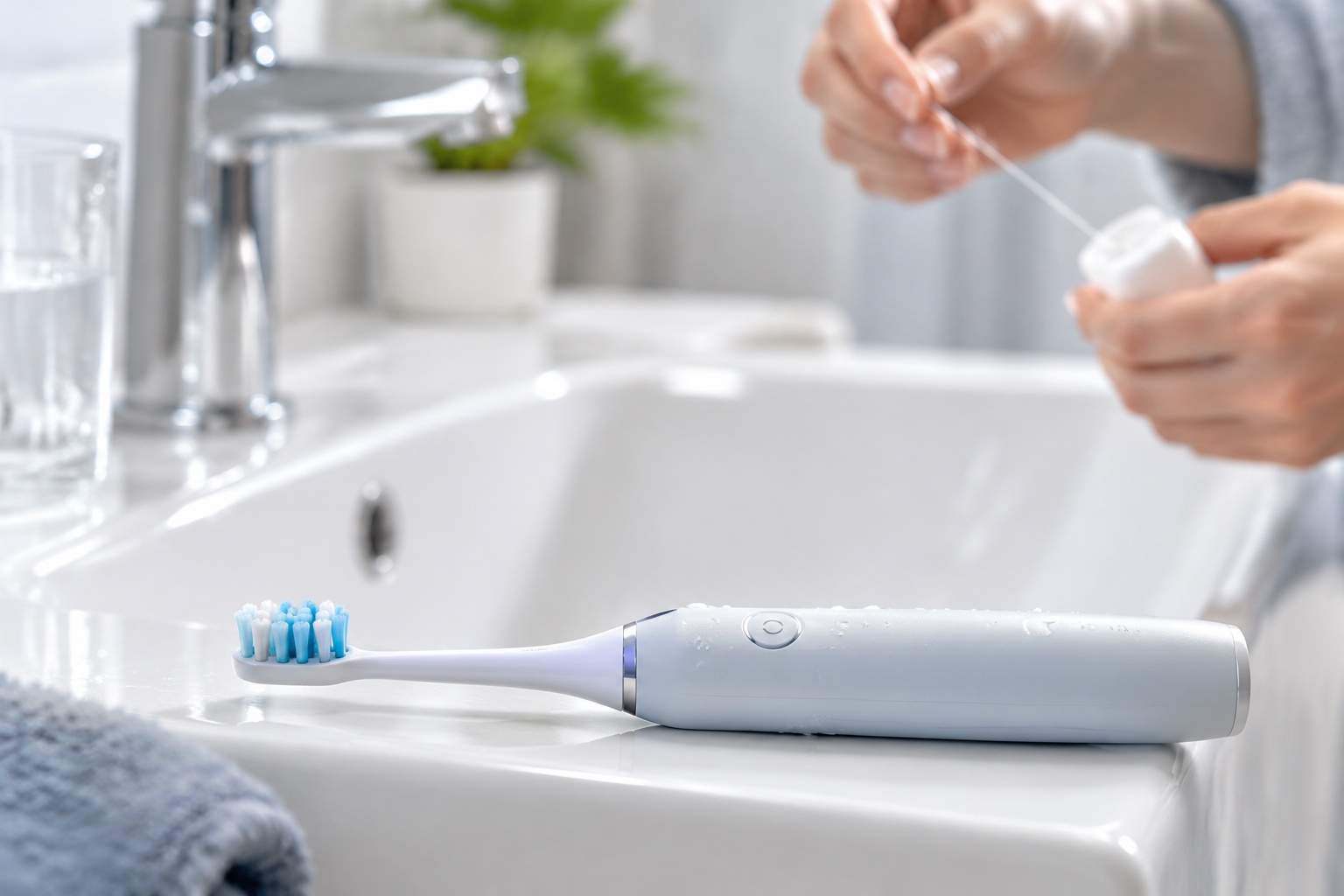
A: Electric brush heads have the same bacterial issues, plus additional crevices where moisture collects. Replace electric heads every three months. Some electric brushes come with UV sanitizing stations—these are helpful but not a substitute for proper storage and lid-closing.
Q: Does covering my toothbrush with a plastic cap protect it from bathroom bacteria?
A: A solid cap without ventilation traps moisture, encouraging bacterial growth. Use a cap with small ventilation holes, or store the brush in a cabinet. For travel, a cap is fine for short periods, but remove it as soon as you return home to let bristles dry completely.