You wince when you sip hot coffee. You avoid ice cream in summer. Cold air hurts when you breathe through your mouth. You’ve tried a “sensitive teeth” toothpaste for months, but the pain remains. Maybe it’s even worse than before.
- 1、The Real Structure: It’s Not About Enamel Thickness
- 2、How Most “Sensitive” Toothpastes Work — And Where They Fall Short
- 3、Three Steps That Actually Close the Tubules
- 4、When Sensitivity Means a Cavity or Crack
- 5、FAQs
Most people believe sensitive teeth mean thin enamel. The solution, they think, is to use a toothpaste that builds enamel or numbs the nerve. But here is a problem rarely discussed: some common toothpaste ingredients actually keep your teeth sensitive by irritating exposed dentin. And many desensitizing toothpastes only mask pain instead of fixing the cause.
The Real Structure: It’s Not About Enamel Thickness
Enamel is the hard outer shell of your tooth. When it wears down, the softer layer underneath — dentin — becomes exposed. Dentin contains thousands of microscopic tubules. Each tubule is a fluid-filled channel leading directly to the tooth’s nerve (pulp).
Sensitive teeth occur when those tubules are open. Hot, cold, sweet, or even touch causes fluid inside the tubules to move. That movement triggers the nerve, sending a sharp, brief pain signal. This is called dentin hypersensitivity. You can have plenty of enamel left but still have sensitive spots if the dentin is exposed at the gumline or on worn areas.
A 2018 study in the Journal of Dentistry found that 57% of adults report some degree of dentin hypersensitivity, with the highest rates between ages 20 and 40. Most of these people have normal enamel thickness — their problem is open tubules, not missing enamel.
The common ingredient that backfires
Sodium pyrophosphate is a common additive in “tartar control” and “whitening” toothpastes. It prevents calcium from depositing on teeth. However, sodium pyrophosphate also irritates exposed dentin and can keep tubules open. For people with sensitive teeth, using a tartar-control or whitening toothpaste daily can worsen pain over weeks.
Similarly, baking soda (sodium bicarbonate) is highly abrasive. While safe for most teeth, it can aggravate already-sensitive areas by physically scrubbing away the protective smear layer that naturally blocks tubules.
How Most “Sensitive” Toothpastes Work — And Where They Fall Short
There are two types of desensitizing toothpastes. They work very differently.
Nerve desensitizers (potassium nitrate)
Potassium nitrate penetrates the tooth and calms the nerve so it does not send pain signals. This is like turning down the volume on a speaker. It works, but only while you use it. Stop using the toothpaste, and pain returns. Also, it takes two to four weeks of daily use to show any effect.
Tubule blockers (stannous fluoride, arginine, or hydroxyapatite)
These ingredients physically seal the open dentin tubules. No fluid movement, no pain. This is like patching the holes. The effect lasts longer, and some products work within days.
A 2020 comparative trial in Clinical Oral Investigations found that stannous fluoride reduced sensitivity by 46% within one week, compared to 28% for potassium nitrate. However, stannous fluoride can stain teeth if used incorrectly — which is why many people avoid it without knowing its benefit.
The real failure of many “sensitive” toothpastes is that they rely only on potassium nitrate while using harsh abrasives or pyrophosphates that irritate dentin. You are numbing the nerve while irritating the tubules. That is why your pain may not fully go away.
Three Steps That Actually Close the Tubules
You do not need expensive in-office treatments. You need the right daily routine.
Step 1: Switch to a stannous fluoride or hydroxyapatite toothpaste
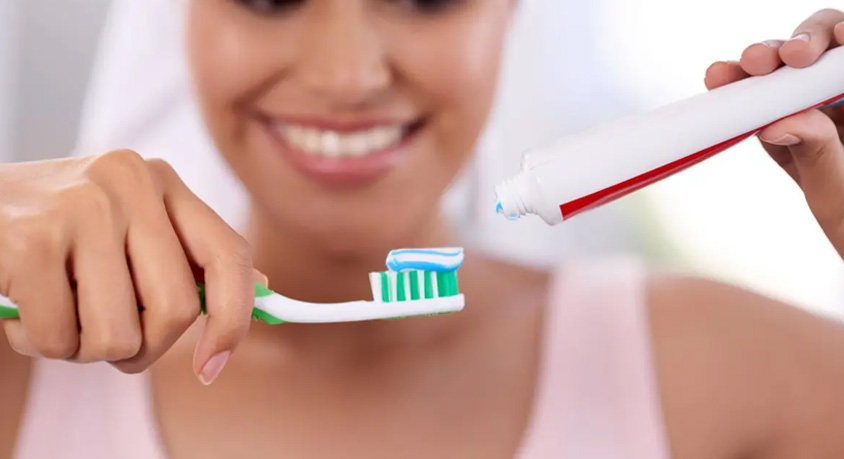
Look for these active ingredients. Avoid “tartar control,” “whitening,” or “baking soda” labels. Use a small pea-sized amount. Do not rinse with water after brushing — spit excess and let the residue sit on your teeth for 20 minutes. This allows the tubule-blocking ingredients to deposit on dentin.
Step 2: Change your brushing technique
Aggressive brushing with a medium or hard brush wears away the natural smear layer. Use a soft brush. Hold it like a pencil — light grip. Angle bristles toward the gumline. Do not scrub back and forth. Small circular motions. Many people with sensitive teeth are simply brushing too hard, reopening tubules every day.
Step 3: Address dietary acid
Acidic foods (soda, citrus, wine, vinegar) dissolve the smear layer and open tubules. If you drink something acidic, rinse with plain water immediately. Wait at least 30 minutes before brushing — acid softens the surface, and brushing then removes tiny bits of tooth structure.
A 2019 study in Caries Research showed that simply waiting 30 minutes after an acidic drink reduced dentin wear by 60% compared to brushing immediately.
When Sensitivity Means a Cavity or Crack
Not every sharp pain is dentin hypersensitivity. See a dentist if:
- The pain lingers for more than a few seconds after the stimulus is removed.
- You have a specific tooth that hurts when you bite down.
- There is visible dark spot, hole, or recent filling.
These signs suggest a cavity, cracked tooth, or leaking filling — all of which need professional treatment, not toothpaste. Sensitivity that affects only one tooth is rarely just hypersensitivity.
For people with generalized, mild-to-moderate sensitivity across multiple teeth, the tubule-blocking approach works for over 80% of cases within two weeks.
FAQs
Q: Can whitening strips or professional whitening cause permanent sensitivity?
A: Most whitening-related sensitivity is temporary, lasting a few days to two weeks. However, if you already have open dentin tubules, whitening products (especially carbamide peroxide) can penetrate deeper and cause prolonged pain. Always use a desensitizing protocol recommended by your dentist before and after whitening. Do not whiten if you have active, untreated sensitivity.
Q: Is it safe to use stannous fluoride toothpaste every day?
A: Yes, stannous fluoride is approved by the FDA for daily use. The potential side effect is temporary surface staining (brownish spots on teeth). This staining can be removed by a professional cleaning and is not harmful. To minimize staining, brush with a standard fluoride toothpaste in the morning and stannous fluoride at night. Do not smoke or drink coffee immediately after using it.
Q: My gums have receded. Can toothpaste fix that?
A: Toothpaste cannot regrow gum tissue. Receded gums expose root surfaces, which have no enamel — only dentin. You can manage the resulting sensitivity with tubule-blocking toothpaste. For severe recession with pain or cosmetic concerns, see a periodontist for a gum graft. Do not delay, as exposed roots are also at higher risk for root cavities.