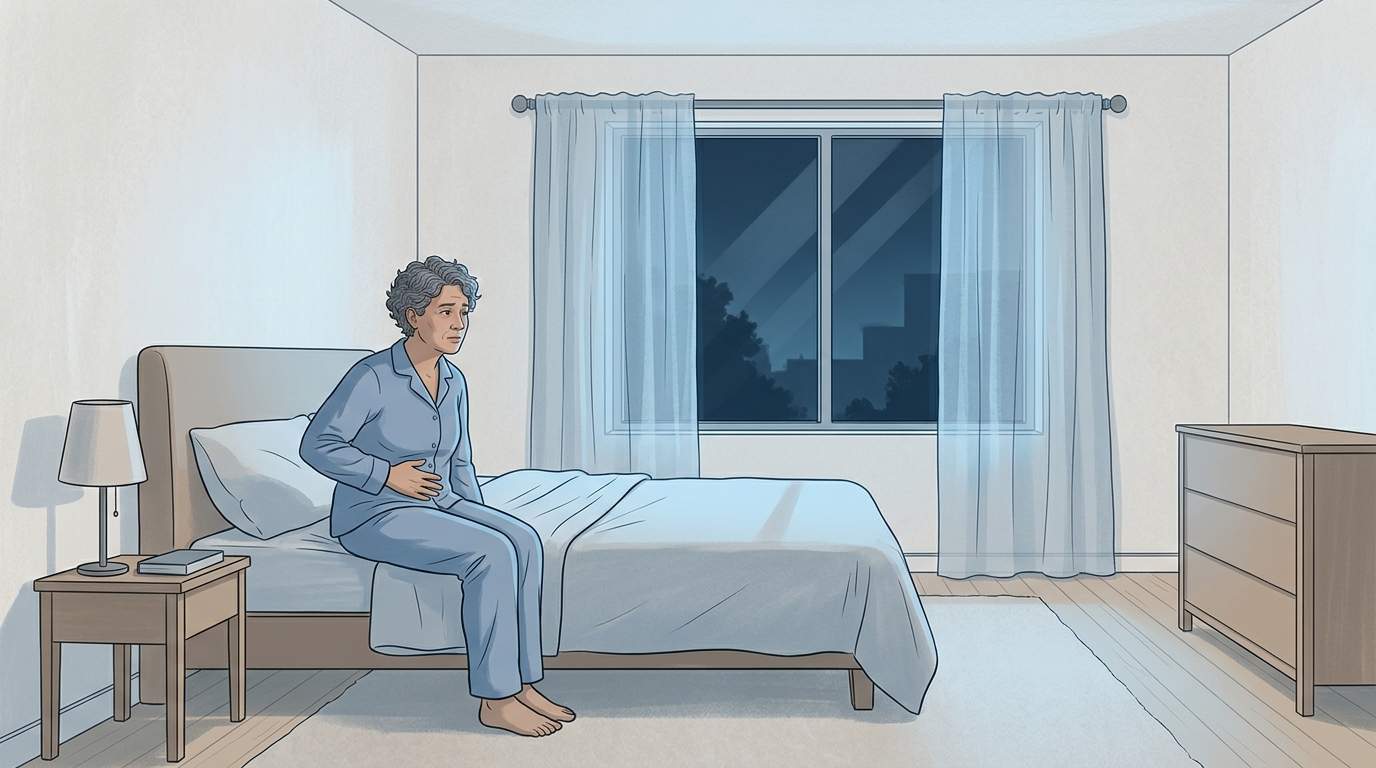
Your leg twitches. Once. You feel it. Then you feel it again. Or maybe you imagined it. You press your hand against your thigh. Does it feel different? You check the other leg for comparison.
E.g. :Lost Keys, Sharp Mind: The Non-Memory Habit That Predicts Brain Aging Better
- 1、When Vigilance Becomes a Trap
- 2、Two Hidden Signs You May Not Recognize
- 3、What Happens in a Health Anxious Brain
- 4、One Tool That Retrains the Alarm System
- 5、A Real Example: Carlos’s Chest Pain
- 6、FAQs
Within minutes, you are convinced you have multiple sclerosis. Or ALS. Or something the internet says starts with muscle twitching.
You have done this before. Last month it was a headache that meant a brain tumor. The month before, a mole that meant skin cancer. You went to the doctor. Tests came back normal. You felt relief for a day. Then a new symptom appeared.
This is health anxiety – not faking illness, not seeking attention, but a genuine fear that your body is betraying you. And the more you check, the worse it gets.
When Vigilance Becomes a Trap
Everyone notices bodily sensations. A headache. A skipped heartbeat. A tingling finger. Most people shrug and move on.
In health anxiety, the brain flags these sensations as threats. You focus on them. You magnify them. You interpret them as proof of a serious disease.
A 2021 study in the Journal of Psychosomatic Research surveyed 2,000 adults and found that 12% met criteria for moderate to severe health anxiety. Among those, the average time between first noticing a symptom and seeking medical reassurance was 36 hours. But the average time between a normal test result and the next worry was just 11 days.
The relief never lasts. Because the problem is not your body. The problem is how your brain processes uncertainty.
Two Hidden Signs You May Not Recognize
Health anxiety does not always look like frantic doctor visits. Often, it hides in quiet behaviors.

The Body Scan That Never Ends
You lie in bed at night, mentally checking every body part. Left foot? Fine. Right knee? Fine. Chest? There is a sensation. Is it pressure? Is it gas? You push on your ribs to see if it hurts.
This body scanning is a compulsion. Each scan temporarily reduces anxiety but strengthens the habit. A 2020 study found that people with high health anxiety spent an average of 47 minutes per day scanning their bodies – time that could have been used for rest or connection.
The Google Diagnosis Loop
You feel a symptom. You search online. The first result is something mild. You scroll further. By page three, you have found a rare disease that matches your symptom perfectly. Your heart pounds. Your symptom feels worse. You search again.
Illness worry driven by internet searches is so common that researchers have a name for it: cyberchondria. A 2022 study found that 74% of people with health anxiety reported that online searching made their anxiety worse – yet they continued to search daily.
What Happens in a Health Anxious Brain
The brain’s anterior insula is responsible for detecting internal body signals – heartbeat, breathing, digestion. In people with health anxiety, the anterior insula is overactive. It sends “something is off” signals even when nothing is wrong.
Simultaneously, the prefrontal cortex – which normally puts those signals into context – fails to calm the alarm. You feel a stomach gurgle. A healthy brain thinks “digestion.” A health anxious brain thinks “cancer.”
A 2019 fMRI study compared health anxious participants to controls while they were shown neutral body sensations. The health anxious group showed 41% higher insula activation and 32% lower prefrontal regulation. Their brains were biologically primed to interpret normal sensations as dangerous.
One Tool That Retrains the Alarm System
You cannot stop noticing body sensations. But you can change how you respond to them.
The 10-Minute “Wait Before Check” Rule
When you notice a new symptom or the urge to search online, set a timer for 10 minutes. Do not check your body. Do not Google. Do not ask a friend. Do something else – wash dishes, stretch, call someone about a different topic.
After 10 minutes, re-evaluate. Is the symptom still there? Often, it has faded. If it has not, you are still allowed to check – but the delay has weakened the urgency.
A 2022 study in Cognitive Behaviour Therapy gave this protocol to 120 people with health anxiety. After four weeks, participants reduced their daily body checking by 51% and their online searching by 44%. The key was the delay – each minute of waiting taught the brain that a symptom does not require an emergency response.
The “Maybe It’s Nothing” Script
Instead of trying to convince yourself “it is definitely nothing” (which your brain will reject), say: “Maybe it is something. Maybe it is nothing. I do not need to know right now.”
This is tolerance of uncertainty. A 2021 trial found that people who practiced verbal uncertainty tolerance for 5 minutes daily reduced their reassurance seeking by 38% over six weeks – more than those who tried to logically disprove their fears.
A Real Example: Carlos’s Chest Pain
Carlos, a 44-year-old electrician, went to the emergency room four times in one year for chest pain. Each time, his heart was fine. Each time, he believed the doctors had missed something.
His therapist taught him the 10-minute wait rule. The next time he felt chest tightness, he set a timer and walked around his living room. At minute four, the tightness softened. At minute eight, it was gone. He did not go to the ER.
He still has bad days. But his ER visits dropped to one in the following year. He learned to say to himself: “My chest feels tight. That is uncomfortable. It does not mean I am dying.”
FAQs
Q: How do I know if my health anxiety needs professional help?
A: If you have had normal test results but still worry daily, if you avoid exercise because you fear heart attack, if you spend more than one hour per day on body scanning or online searching, or if you have gone to the emergency room multiple times with no findings – see a therapist. Cognitive behavioral therapy (CBT) has a 70-80% success rate for health anxiety.
Q: Can health anxiety cause real physical symptoms?
A: Yes. Anxiety itself produces symptoms: racing heart, shortness of breath, muscle tension, tingling, dizziness. This creates a vicious loop: anxiety causes symptom → you interpret symptom as disease → anxiety worsens → symptom worsens. Breaking the loop requires treating the anxiety, not the symptom.