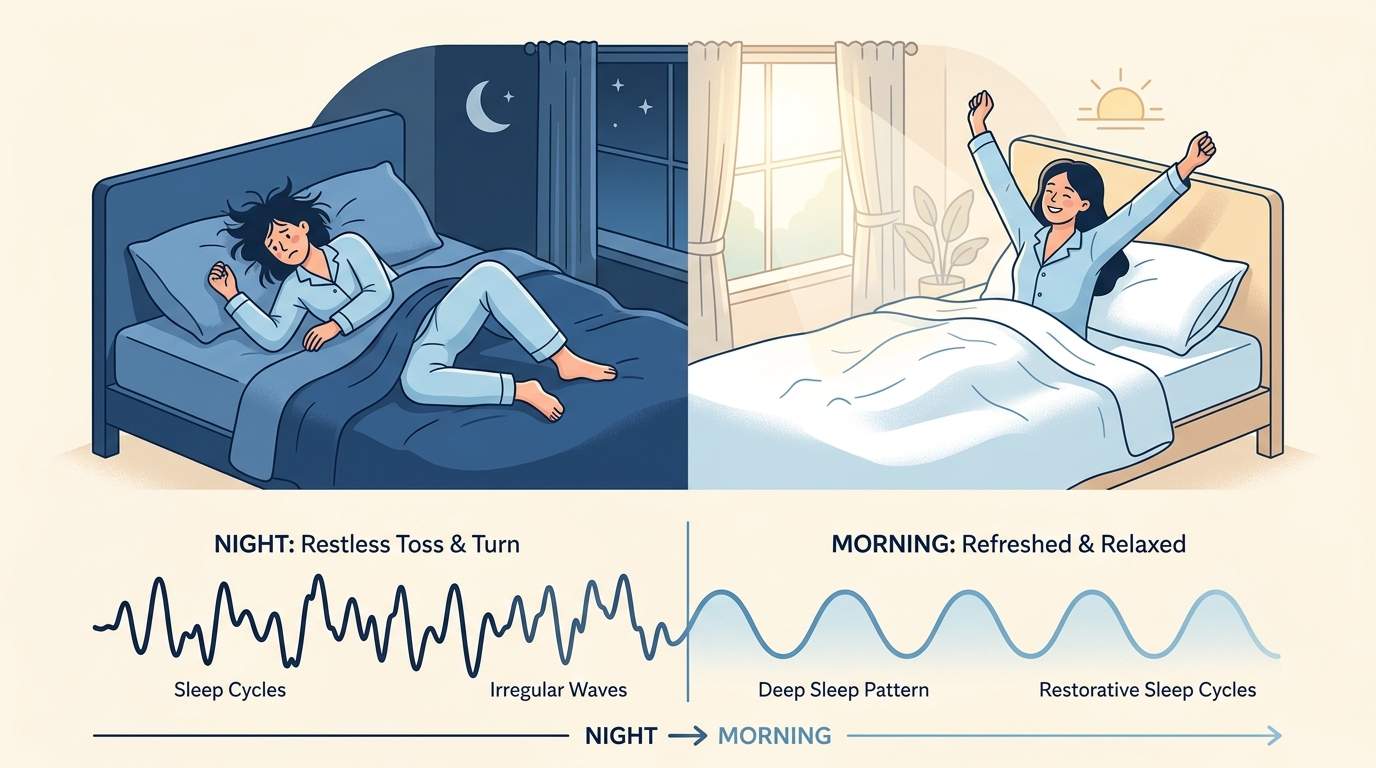
Imagine dragging yourself out of bed after what felt like a full night's rest, only to battle yawns and brain fog through your morning coffee. You've hit the pillow by 10 PM, clocked eight solid hours, yet your body screams exhaustion. This isn't just "one of those weeks"—it's a signal that something deeper is at play in your nightly routine, quietly sabotaging the refresh you crave.
E.g. :Your Glutes Fall Asleep After Sitting? That “Dead Butt” Hurts More Than You Think
- 1、Nighttime Awakenings: The Silent Thief of Sleep Quality
- 2、Why Sleep Duration Falls Short Against Fragmented Sleep
- 3、Sleep Cycles Explained: How Interruptions Derail Your Nightly Reset
- 4、Common Culprits Behind Nighttime Awakenings and Sleep Disruptions
- 5、Practical Steps to Minimize Fragmented Sleep and Boost Sleep Quality
- 6、Long-Term Habits for Restored Circadian Rhythm and Lasting Energy
- 7、FAQs
Nighttime Awakenings: The Silent Thief of Sleep Quality
Nighttime awakenings—those frustrating moments when you jolt awake at 2 AM, stare at the ceiling, and struggle to drift off again—affect up to 35% of adults regularly, according to a 2022 study from the National Sleep Foundation. These interruptions don't just add up in minutes; they shatter your overall sleep quality, leaving you groggy even after "enough" time in bed. I've seen this in countless readers' stories, like Sarah, a project manager who thought her 7.5-hour nights were golden until she tracked her wake-ups and realized they were costing her sharp focus at work.
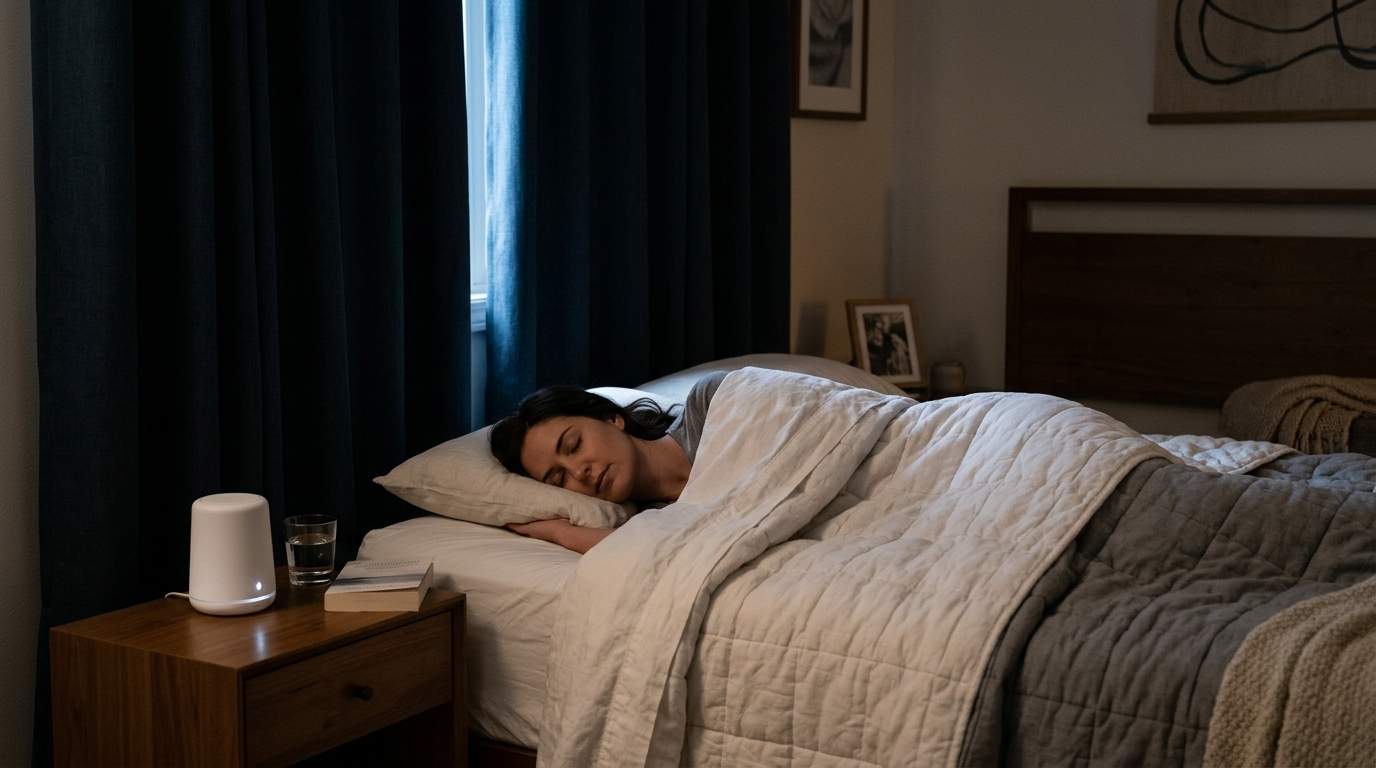
The pain point hits home: you know the drill of tossing for 20-30 minutes before surrendering to restlessness. But why does this happen, and why does it linger into your day? It's not laziness—it's biology demanding a closer look.
Why Sleep Duration Falls Short Against Fragmented Sleep
Everyone chases the magic eight hours, but here's where convention trips up: duration without continuity is like eating calories without nutrition. Research from the American Academy of Sleep Medicine shows that fragmented sleep—interrupted more than three times per night—impairs cognitive function equivalent to a 20% reduction in total sleep time. In one landmark study published in Sleep journal (2017), participants with frequent nighttime awakenings reported 40% higher daytime fatigue scores than those with unbroken rest, despite matching bedtimes.
This challenges the common belief that "just sleep longer" fixes everything. Padding your schedule with extra shut-eye often backfires, leading to more awakenings as your body fights an unnatural rhythm.
Challenging the "8-Hour Rule" Myth
Does banking sleep on weekends really recharge you? Data from the CDC's 2023 sleep report says no—chronic fragmentation builds a deficit that rebounds poorly, spiking stress hormones like cortisol by up to 25%.
Sleep Cycles Explained: How Interruptions Derail Your Nightly Reset
Your sleep isn't a flat line; it's a symphony of 90-minute cycles, cycling through light, deep, and REM stages. Nighttime awakenings mostly strike during lighter phases, yanking you out before deep restoration kicks in. The Sleep Research Society notes that adults average 4-6 cycles nightly, but even one extra awakening per cycle slashes deep sleep by 15-20%, per a 2021 meta-analysis in Sleep Medicine Reviews.
Think of it as a logic closed loop: unbroken cycles consolidate memory, regulate mood via serotonin pathways, and repair tissues through growth hormone release. Disrupt them, and you wake unrefreshed—explaining that mid-afternoon slump. Why does this matter for you? Because reclaiming cycles isn't about pills; it's rewiring habits with proven science.
The Role of Circadian Rhythm in Sleep Cycles
Your internal clock, synced to light and temperature, peaks melatonin around 10 PM-2 AM. Disruptions misalign this, per Harvard Medical School's Division of Sleep Medicine, amplifying awakenings by 30% in shift workers.
Common Culprits Behind Nighttime Awakenings and Sleep Disruptions
Blame often lands on stress, but let's peel back layers. Caffeine lingers with a 5-6 hour half-life— that 3 PM latte fuels 2 AM wake-ups, as confirmed by Johns Hopkins Medicine. Alcohol? It fragments REM sleep, increasing arousals by 25%, according to a NIH-funded study.
Environmental factors shine too: room temps above 68°F (20°C) double awakenings, per the National Sleep Foundation. And screens? Blue light suppresses melatonin by 23%, delaying onset by 30 minutes (University of Pennsylvania research, 2019). These aren't random; they're predictable breakers in your cycle chain.
I get the frustration—life's demands make perfect conditions feel impossible. But small shifts yield big wins, restoring that "woke up ready" feeling.
Practical Steps to Minimize Fragmented Sleep and Boost Sleep Quality
Start with sleep hygiene: dim lights two hours pre-bed to signal your circadian rhythm. A consistent schedule aligns cycles—deviations over 60 minutes hike awakenings by 50%, says the European Sleep Research Society.
Track via apps or journals; one reader cut wake-ups from five to one in two weeks by logging patterns. Temperature control? Cool showers pre-bed drop core temp, mimicking natural dips for 15% fewer interruptions.
Nutrition Ties to Better Sleep Cycles
Avoid heavy meals three hours before bed—digestion spikes alertness. Opt for sleep-friendly foods like cherries (natural melatonin source), boosting deep sleep phases by 10-15% in small trials from the Journal of Medicinal Food.
Long-Term Habits for Restored Circadian Rhythm and Lasting Energy
Exercise mid-day enhances slow-wave sleep by 20%, per Mayo Clinic data, but avoid evenings. Mindfulness? A 2020 JAMA review found 10-minute daily practices reduce awakenings by 28% via lowered hyperarousal.
Build resilience: exposure to morning sunlight resets your clock, cutting fatigue 35% in insomniacs (Chronobiology International, 2018). These form a closed loop—consistent inputs yield compounding rest, turning exhaustion into vitality.
You're not alone in this fog; prioritizing quality over quantity empowers real change. Listen to your nights—they're guiding you to better days.
FAQs
Q: How many nighttime awakenings are normal?
A: One or two brief arousals per night is typical for adults, but more than three signals fragmented sleep impacting quality. Track for a week; if persistent, consult a doctor to rule out apnea.
Q: Can stress alone cause chronic fragmented sleep?
A: Yes, it elevates cortisol, fragmenting cycles, but pairs often with habits like late caffeine. A CDC survey links stress to 40% higher awakening rates—combining relaxation with hygiene tackles root causes.
Q: Does napping help fix poor sleep quality from awakenings?
A: Short 20-minute naps before 2 PM can bridge gaps without cycle interference, improving alertness 34% per NASA studies. Avoid longer ones to prevent deeper nighttime disruptions.