You stand up after a long meeting. Your lower back feels stiff. Your hip clicks. And your buttocks feel strangely numb — almost like they forgot how to work. You walk a few steps, shake your legs, and the feeling returns. You assume it’s normal. Everyone sits.
E.g. :Tired of Flakes? Your Oily Scalp, Not Dryness, Fuels Dandruff
- 1、Why Your Glutes “Fall Asleep” Faster Than Other Muscles
- 2、The Common Mistake: Stretching What Feels Tight
- 3、The 90-Second Desk Reset
- 4、Why “Sit Less” Is Not Realistic
- 5、The Long-Term Fix: Frequent Reminders
- 6、When Numbness Is Not a Muscle Problem
- 7、FAQs
But here is what worries movement specialists: that numbness is not just poor circulation. It is a sign that your gluteal muscles have stopped talking to your brain. This condition is called gluteal amnesia, or dead butt syndrome. And the common advice to “just stretch more” often makes it worse.
Why Your Glutes “Fall Asleep” Faster Than Other Muscles
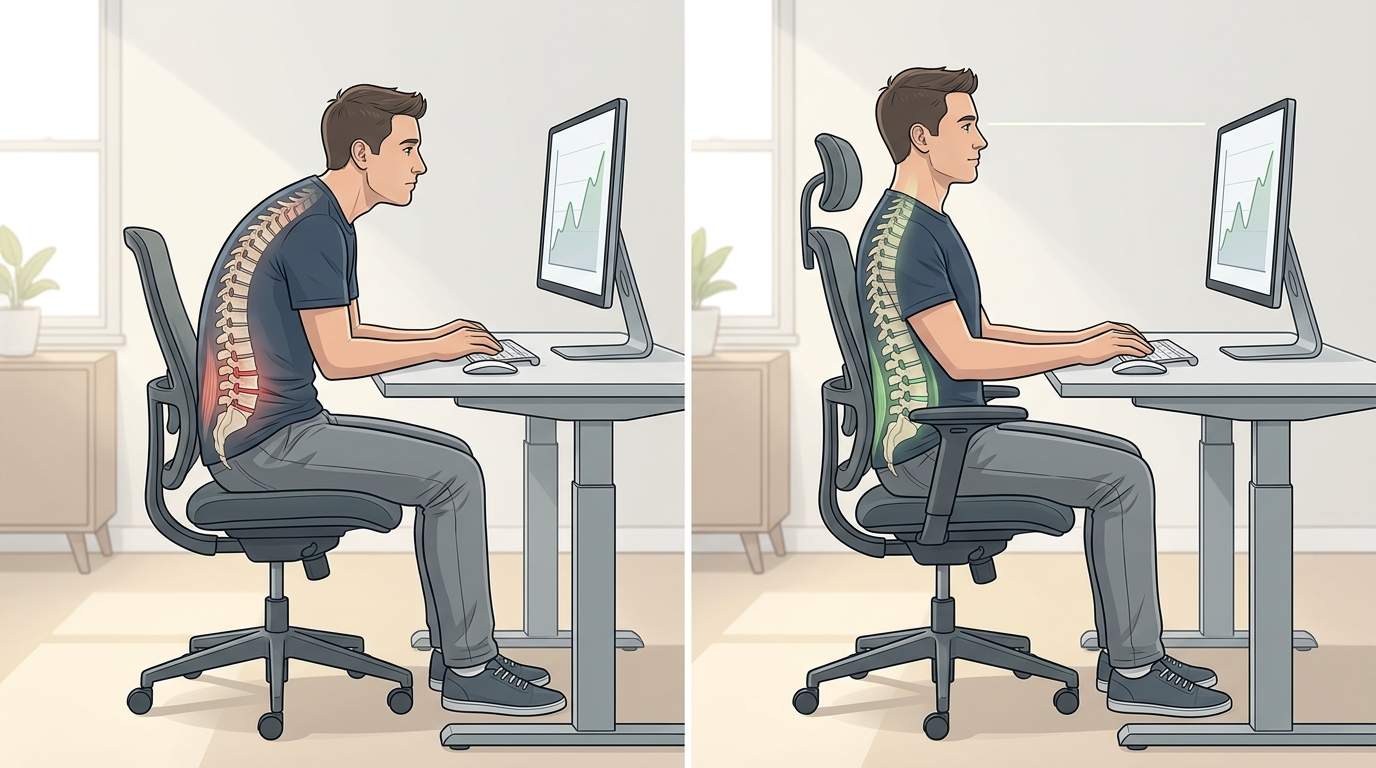
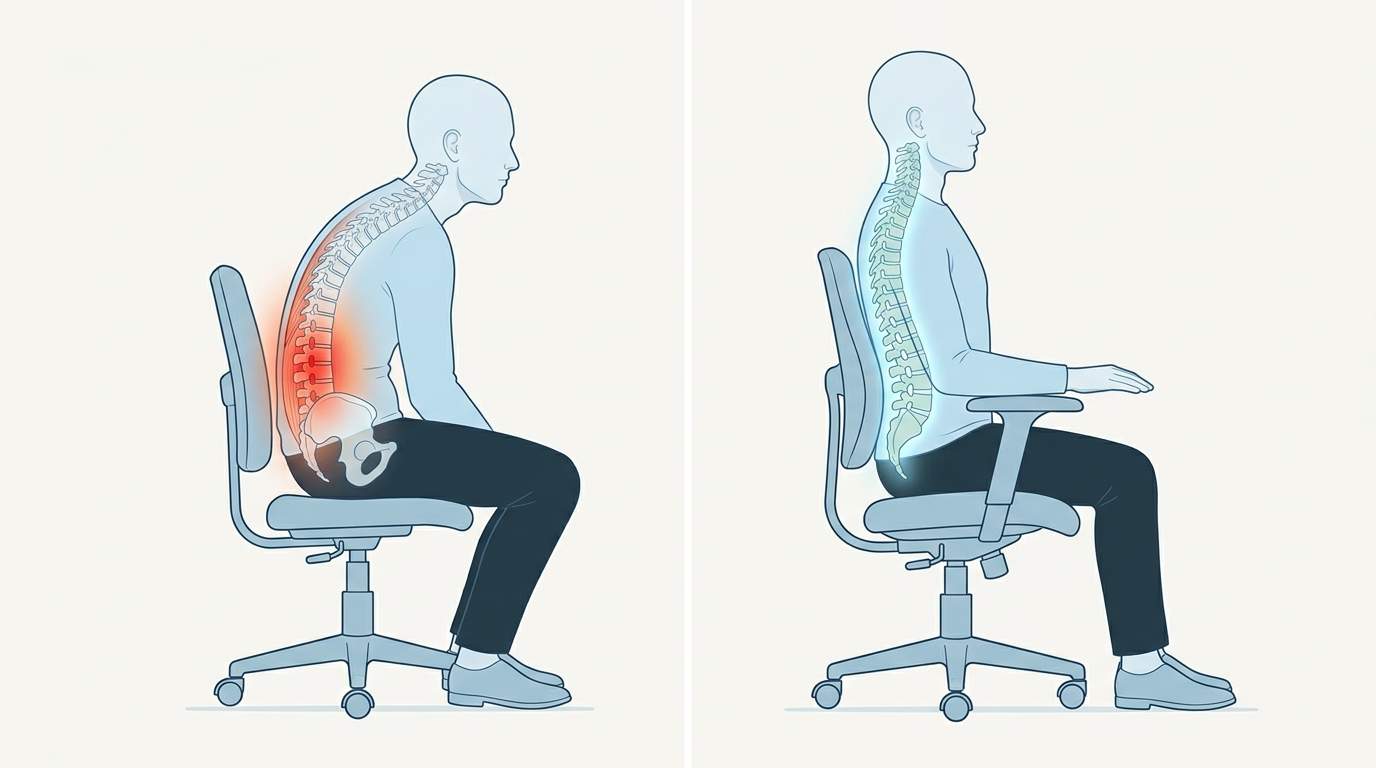
Your glutes are among the largest muscles in your body. They are designed to stabilize your pelvis and keep your spine neutral. But when you sit for long periods, your hip flexors shorten and your glutes are placed in a stretched, inactive position.
Within 20 minutes of sitting, electrical activity in the glutes drops. A 2019 EMG study found that after one hour of sitting, gluteal activation during standing was reduced by 30%. After four hours, nearly 50%. The brain turns down the signal because these muscles are not needed while seated. This is neural inhibition, not weakness.
How back pain and knee pain creep in
When your glutes stay asleep, other muscles take over. Your lower back and hamstrings do the job of hip extension. Your quadriceps try to stabilize your pelvis. These muscles are not designed for that role. They become overworked and painful. This is why desk workers often have chronic lower back and knee pain even with “strong” legs.
The Common Mistake: Stretching What Feels Tight
Most people, feeling hip tightness, immediately stretch their hamstrings. But that often backfires. Tight hamstrings are a symptom — they are gripping because your glutes are not firing. Stretching them temporarily relieves tension but does nothing to wake up the dead muscle.
A 2020 study in the Journal of Sports Rehabilitation compared two groups with sitting-related back pain. One did hamstring stretches daily. The other did glute activation exercises. After six weeks, the activation group reported 60% less pain, while the stretching group saw only 15% improvement.
Activation is not heavy exercise
You do not need squats or lunges. Those require your glutes to already be online. Activation means low-load, isolated contractions that remind your brain where the glutes are.
The 90-Second Desk Reset
You need to interrupt the inhibition before it settles in.
Seated glute squeeze
While sitting with feet flat, squeeze your buttocks together for five seconds. Relax. Repeat ten times. Do this every 30 minutes. It is a neural reminder, not a workout.
Standing hip hinge
When you stand up, do not walk immediately. Stand with feet shoulder-width apart. Push your hips straight back, keeping your spine neutral. Return. Repeat ten times. This forces your glutes to work before your hamstrings or back cheat.
A 2021 trial found that performing ten hip hinges immediately after standing reduced lower back pain by 40% within one week in office workers.
Why “Sit Less” Is Not Realistic
If you have a desk job and a commute, standing every hour is often impossible. Focus on how you sit and what you do after standing.
Two simple adjustments
- Sit on the edge of your chair, not leaning back. Leaning back relaxes glutes further.
- Shift your weight every few minutes. Small movements prevent complete neural shutdown.
A wedge-shaped cushion with a forward tilt can help. Avoid doughnut cushions — they are for tailbone injuries, not glute amnesia.
The Long-Term Fix: Frequent Reminders
Gluteal amnesia is reversible. A 2022 systematic review in Clinical Biomechanics concluded that daily, low-repetition activation exercises (5–10 minutes spread across the day) are more effective than twice-weekly heavy strength training.
A simple daily checklist
- Every time you stand up, do five hip hinges.
- While brushing your teeth, do ten seated glute squeezes.
- Once a day, lie on your side and do 15 clamshells.
Within two weeks, most people lose the “dead butt” feeling and notice less back stiffness.
When Numbness Is Not a Muscle Problem
Rarely, numbness after sitting is a pinched nerve (sciatic or pudendal). If you have tingling down your thigh or foot, see a doctor. For the vast majority of desk workers with a dull back ache and glutes that feel “forgotten,” the fix is waking them up with simple neural reminders. Your glutes are not weak — they are just quiet.
FAQs
Q: Can walking replace glute activation exercises?
A: Walking helps only if you walk with proper form — pushing off your big toe and feeling your glute contract at the end of each step. Most people walk with a quad-dominant pattern. Place your hand on your buttock while walking. If you feel nothing, practice squeezing gently with each step.
Q: How do I know if my back pain is from dead butt syndrome or a disc problem?
A: Gluteal amnesia causes a dull, diffuse lower back ache that improves when you consciously squeeze your glutes. Disc pain is often sharper, may radiate down one leg, and worsens with bending forward. If you have foot numbness or bladder changes, seek care immediately. Otherwise, try glute activation for one week. If no improvement, see a physical therapist.