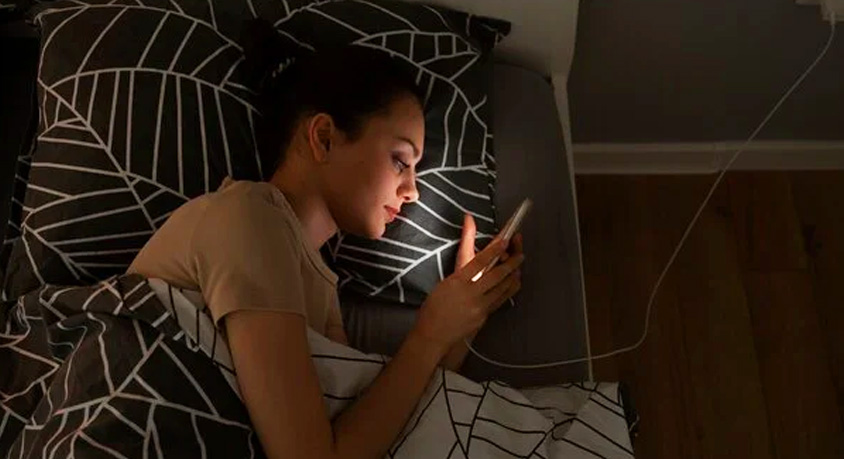
You wake up, swing your legs out of bed, and a familiar stiffness grabs your lower back. You stand slowly, wincing. You assume it’s your office chair — eight hours of sitting, that terrible lumbar support, maybe you slouched too much yesterday. So you buy a cushion. You adjust your monitor. You even try gentle morning stretches. The pain stays.
- 1、The Deep Muscle Failure That Happens When You Sit
- 2、The One Fix: A 90-Second Activation, Not a 20-Minute Routine
- 3、Why “Core Strength” Often Fails People
- 4、When Back Pain Is Not Muscular: Red Flags
- 5、FAQs
The problem is not your chair. The problem is not even your posture, at least not in the way you think. After decades of telling people to “sit up straight” and “strengthen your core,” back pain rates have not dropped. In fact, the global prevalence of lower back pain has risen by nearly 20% since 2000, according to the Global Burden of Disease Study 2021.
Let’s look at what actually causes that morning back pain — and why the most popular advice often misses the real mechanism entirely.
The Deep Muscle Failure That Happens When You Sit
Most people believe that sitting “compresses” the spine, and that’s why it hurts. Compression is real, but it’s not the main issue. Your spine is designed to handle far more load than sitting creates. The real villain is something called segmental instability — tiny, uncontrolled micro-movements between your vertebrae.
When you sit for hours, the small stabilizing muscles (multifidus, rotator brevis) that run directly alongside your spine slowly turn off. This is not weakness. It’s neurological inhibition. Your brain literally stops activating these muscles because the position of sitting on a chair provides passive support. No need to fire them.
After six hours of sitting, those muscles remain partially dormant even when you stand up. That’s why your lower back feels “loose” or “wobbly” in the morning. The bones and ligaments take the load instead of the muscles. And ligaments, unlike muscles, are not meant to bear dynamic weight. They become inflamed, and you feel that as a dull ache.
Why stretching can make it worse
Common morning stretches — pulling your knees to your chest, bending forward to touch your toes — actually stretch the already-stressed ligaments and further inhibit the sleeping stabilizers. This provides temporary relief (stretching always feels nice) but often worsens the problem over weeks. What those muscles need is not lengthening but reactivation.

The One Fix: A 90-Second Activation, Not a 20-Minute Routine
You don’t need a new chair, a standing desk, or a yoga practice. You need to wake up your deep spinal stabilizers before your feet hit the floor. Here is a single exercise that targets the root mechanism.
The supine pelvic tilt with breathing
Lie on your back with knees bent, feet flat on the bed or floor. Place your fingertips on your lower belly, just inside your hip bones. Gently flatten your lower back against the surface by tilting your pelvis backward — imagine zipping up a tight pair of jeans. You should feel a light contraction deep in your lower abdomen, not your butt or thighs.
Hold this gentle tilt while you take three slow, nasal breaths. Then release completely. Repeat twice. Total time: 90 seconds.
This simple movement does three things: it activates the transversus abdominis (a deep corset muscle), it turns on the multifidus via a reflex called the “deep stabilizing system,” and it resets the neurological inhibition from yesterday’s sitting. Do this before you even sit up in bed. Then stand. Most people notice the difference immediately: the morning stiffness is still there, but the sharp or achy quality is reduced.
Why “Core Strength” Often Fails People
If you’ve tried planks, crunches, or Pilates for your back pain and saw little improvement, you’re not alone. Traditional core exercises train the superficial muscles (rectus abdominis, obliques) but often miss the deep, small muscles that control segmental stability. In fact, a 2019 systematic review in The Spine Journal found that general core strengthening was no more effective than general exercise for chronic lower back pain.
The key is specificity. The deep stabilizers respond best to low-load, precise movements — like the pelvic tilt — not high-force contractions. Think of them as fine motor muscles, not powerlifters.
The role of your morning mattress
If your morning back pain persists despite doing the activation exercise for two weeks, check your mattress. A mattress that is too soft allows your pelvis to sink, keeping your lumbar spine in a flexed (curved forward) position all night. That sustained position can cause morning stiffness. A medium-firm mattress generally provides the best support for back pain, according to a 2015 study in The Lancet.
But don’t rush to buy a new mattress until you’ve tried the activation exercise for at least 10 days. Many people see complete resolution without spending any money.
When Back Pain Is Not Muscular: Red Flags
The fix above works for mechanical, muscle-based morning back pain — the kind that feels better with movement and worse with prolonged sitting. However, see a doctor immediately if:
- The pain wakes you up in the middle of the night (not just in the morning).
- You have numbness or tingling down your leg.
- You recently had a fall or injury.
- The pain is accompanied by unexplained fever or weight loss.
These can indicate disc herniation, inflammatory arthritis, or other conditions that need professional diagnosis.
For the vast majority of desk workers with that familiar “stiff and sore upon waking” experience, the solution is not a better chair or more stretches. It is retraining your deep stabilizers to turn back on after being silenced by hours of sitting. Try the 90-second morning tilt for one week. Your back will tell you the answer.
FAQs
Q: Should I use a lumbar support cushion in my office chair?
A: Yes, but as a temporary aid, not a permanent fix. A lumbar cushion can reduce strain during long sitting sessions, but relying on it exclusively continues the cycle of passive support and muscle inhibition. Use it when you have to sit for extended periods, but also take micro-breaks every 30 minutes to stand and perform one or two pelvic tilts to keep the stabilizers active.
Q: Is walking good or bad for lower back pain?
A: Walking is generally excellent, as long as you maintain a neutral spine. Avoid walking with a forward-leaning posture or looking down at your phone. Swing your arms naturally, keep your chest open, and engage your lower belly gently. Start with 10 minutes after meals. If walking increases your pain, see a physical therapist — you may have a specific movement pattern that needs correction.
Q: Can sleeping on my side cause morning back pain?
A: Side sleeping is usually fine, but place a firm pillow between your knees. This keeps your pelvis from rotating and your lower back from twisting. Without the pillow, your top leg drops forward, creating a torsion in the lumbar spine. Many people wake up with asymmetrical back pain (worse on one side) because of this exact problem.