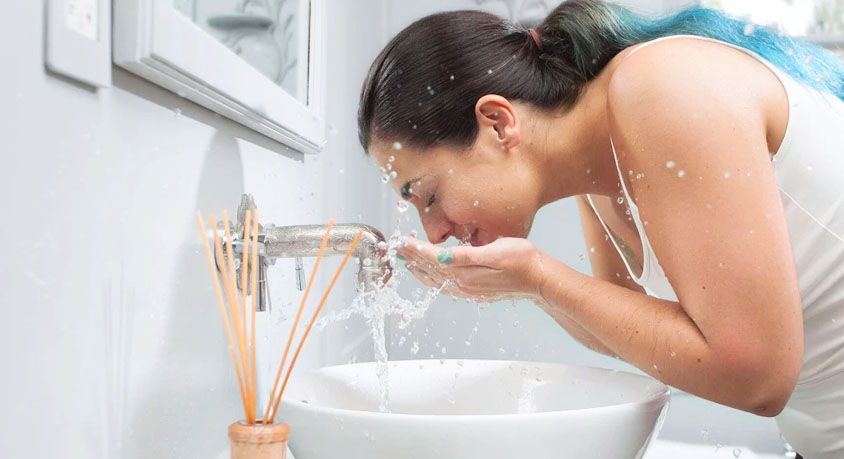
You step out of a warm shower, and your face feels tight. By midday, fine flakes appear around your nose. So you reach for a facial mist or sheet mask. It feels cool at first, but an hour later, your skin is tighter than before.
E.g. :Your Skin Reacts to Everything – But “Gentle Only” Isn’t the Answer
- 1、The Mist-and-Mask Trap: Why More Water Makes Your Dry Skin Worse
- 2、The Science of Skin Hydration: It’s Not About Adding Water
- 3、Humectants Alone Backfire: Why You Need Occlusives
- 4、Practical Moisturizing Tips for Dry Skin That Actually Work
- 5、When Dry Skin Signals Something Else
- 6、FAQs
This is frustrating. More water on the surface does not equal more hydration inside. In fact, frequent misting without sealing can pull water out of your skin. Let’s unpack why.
The Mist-and-Mask Trap: Why More Water Makes Your Dry Skin Worse
Facial mists are mostly water. When you spray water onto your skin, it temporarily swells, then evaporates within 10–20 minutes. During evaporation, it drags some of your skin’s own moisture with it—called the evaporative drying effect.
A 2016 study in the Journal of Cosmetic Dermatology found that after 30 minutes, transepidermal water loss (TEWL) was higher than baseline if no occlusive was applied afterward. You borrowed water and paid back more.
The Science of Skin Hydration: It’s Not About Adding Water
Dry skin isn’t just low on water. It lacks the ability to hold water. Your skin’s outer layer (stratum corneum) acts like a brick wall. The bricks are dead skin cells, and the mortar is made of ceramides, cholesterol, and fatty acids.
Harsh soaps or hot water damage this mortar. Water leaks out. Your natural moisturizing factor (NMF)—amino acids and urea inside the bricks—washes away. Without NMF, the bricks cannot grip water. A 2017 paper in Dermatology and Therapy confirmed that low NMF directly causes dry, scaly skin—regardless of how much water you drink.

Humectants Alone Backfire: Why You Need Occlusives
Humectants (glycerin, hyaluronic acid) draw water from deeper skin layers. In dry air, that water evaporates quickly, leaving you drier.
The Fix: Always Pair Humectants With Occlusives
- Occlusives (squalane, shea butter, petrolatum) block evaporation. Petrolatum reduces TEWL by 98% within hours (British Journal of Dermatology, 2014).
- A 2019 trial in Dermatology compared a humectant-only serum to a humectant-plus-occlusive cream. The cream group had 65% lower TEWL after two weeks; the serum-only group still had flaking.
Practical Moisturizing Tips for Dry Skin That Actually Work
Stop relying on mists alone. Build a routine that locks water in.
The Two-Step Routine
- Apply humectant to damp skin – Right after washing, use a hydrating toner or hyaluronic acid serum.
- Seal within 60 seconds – Follow with a ceramide moisturizer or squalane oil.
Ingredient Watch
- Look for: glycerin, shea butter, niacinamide (boosts ceramides).
- Avoid: denatured alcohol and high-pH bar soaps. A 2018 study in Skin Research and Technology found high-pH cleansers increase TEWL by 40% after five days.
Most people see smoother, less reactive skin within one to two weeks.
When Dry Skin Signals Something Else
If dryness persists with redness, deep cracks, or severe itching despite moisturizing, consult a doctor. Conditions like atopic dermatitis or psoriasis need medical treatment, not just moisturizer.
FAQs
Q: Does drinking more water cure dry skin?
A: Not directly. For healthy people, extra water does not measurably improve TEWL or barrier function. A 2018 review in Clinical, Cosmetic and Investigational Dermatology concluded that topical moisturizers have a far larger impact.
Q: Can oily skin be dry at the same time?
A: Yes. This is oily dehydrated skin. Use a lightweight gel moisturizer with ceramides and niacinamide, and avoid stripping cleansers.
Q: How often should I exfoliate dry skin?
A: No more than once a week, with gentle chemical exfoliants like 5% lactic acid. Always follow with an occlusive moisturizer.