You look down at your hands. Your fingernails have deep vertical lines. There’s a tiny white spot on one nail. Another nail chips easily when you open a package.
- 1、Ridges: Aging, Not Deficiency (And Why Biotin Helps Anyway)
- 2、White Spots: Trauma, Not Fungus or Zinc Deficiency
- 3、Fragile Nails: Hydration vs. Hardening
- 4、What Actually Works for Nail Health Vitamins and Care
- 5、When Nail Changes Signal a Medical Problem
- 6、FAQs
Most people assume this means they’re missing calcium or have a mild fungal infection. They buy calcium supplements or antifungal creams. Nothing changes.
Here’s what dermatologists know that most guides don’t: vertical ridges are rarely a deficiency, and white spots are almost never fungus. Most common nail changes are simply aging, minor trauma, or slow growth – not a disease. But the right kind of care can still make a real difference.
Ridges: Aging, Not Deficiency (And Why Biotin Helps Anyway)
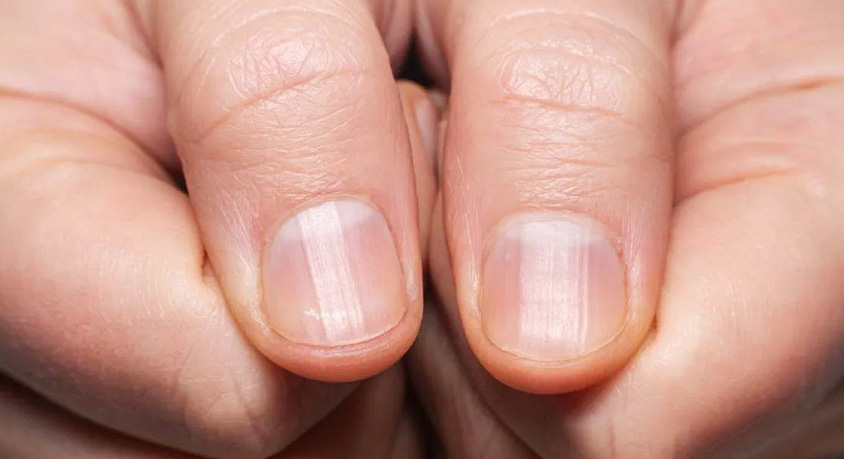
Those vertical lines running from cuticle to tip are called onychorrhexis. They appear because your nail matrix (the growth center under the cuticle) produces slightly uneven nail plates as you age.
What the Research Says
By age 50, over 60% of adults have visible vertical ridges. By age 70, it’s nearly universal (source: Journal of the American Academy of Dermatology, 2018). These ridges are not caused by low calcium, iron, or vitamin D. They are a structural change, like wrinkles on skin.
However, if ridges are accompanied by splitting or peeling at the free edge (onychoschizia), you may have brittle nails. A 2017 clinical trial found that biotin (2.5mg daily for 6 months) increased nail thickness by 25% and reduced splitting. Biotin doesn’t erase ridges, but it strengthens the nail so ridges don’t lead to breaks.
White Spots: Trauma, Not Fungus or Zinc Deficiency
Those small, well-defined white dots (leukonychia) are almost always caused by minor injury to the nail matrix – bumping your finger against a desk, pressing too hard while filing, or even using your nail as a tool.
Why They Appear Weeks Later
The injury happens at the matrix, but the white spot only becomes visible when the nail grows out – which takes 4–6 weeks. By the time you see it, you’ve forgotten the bump.
True fungal infections (onychomycosis) cause yellowing, thickening, and crumbling, not isolated white dots. Zinc deficiency can cause white spots, but this is extremely rare in people with a normal diet, and the spots are usually broad, hazy patches, not distinct dots.
The fix for trauma-related white spots: nothing. They grow out with the nail in 3–6 months. Cutting off the white part won’t speed it up.
Fragile Nails: Hydration vs. Hardening
Many people with brittle nails try “hardening” polishes. This often backfires.
The Water Flexibility Balance
Nails need a certain amount of water to stay flexible. When you repeatedly wet and dry your hands (dishes, handwashing, showers), nails swell and shrink. Over time, this cyclical stress causes micro-fractures and peeling.
Hardening polishes contain formaldehyde or formalin, which make nails more rigid – and therefore more likely to crack under impact. A 2019 study in Skin Appendage Disorders recommended avoiding nail hardeners for most people with brittle nails and instead using moisturizers containing lanolin or petroleum jelly.
A Simple Night Routine
Apply a thick hand cream or pure petroleum jelly to your cuticles and nails before bed. Wear cotton gloves if possible. Within two weeks, nails retain more water and flexibility, reducing chipping.
What Actually Works for Nail Health Vitamins and Care
You don’t need a dozen supplements. Focus on a few evidence-based steps.
Biotin – The Only Supplement with Strong Evidence
- Dose: 2.5–5mg daily (2,500–5,000 mcg).
- Patience: Allow 6 months to see measurable improvement.
- Note: Biotin can interfere with thyroid and cardiac lab tests. Inform your doctor before testing.
Gentle Filing, Not Buffing
File nails in one direction, not back-and-forth sawing. Never buff the nail surface – buffing thins the nail plate and increases fragility.
Wear Gloves for Wet Work
Dishwashing and cleaning expose nails to water and detergents for prolonged periods. An inside-out pair of cotton gloves under rubber gloves reduces moisture trapping.
When Nail Changes Signal a Medical Problem
Most ridges, white spots, and brittleness are benign. But certain patterns need a doctor.
Red Flags
- Pitting (small depressions) – possible psoriasis.
- Spoon-shaped nails (koilonychia) – possible iron deficiency.
- Dark brown or black streaks – possible melanoma (rare but serious).
- Yellow, thick, crumbly nails – possible fungal infection requiring prescription antifungals.
If one nail looks very different from the others, or if the change started suddenly, show it to a dermatologist. Most nail conditions are treatable.
FAQs
Q: Does soaking nails in olive oil help brittleness?
A: Temporarily. Oils make nails feel smoother but don’t penetrate deeply. Soaking in water is worse because water swells then evaporates, causing more stress. Use a thick cream with urea or lanolin instead – these ingredients absorb better.
Q: Can nail polish cause ridges or white spots?
A: Polish itself does not cause ridges. But aggressive removal (peeling off polish or using acetone daily) can dry out the nail plate, making existing ridges more visible. Use a non-acetone remover and give nails a “breath day” once a week.
Q: Do collagen supplements improve nails?
A: Weak evidence. One small 2017 study showed modest improvement in nail growth and brittleness after 24 weeks of collagen peptides. But biotin has far stronger data. If you choose collagen, use it as an add-on, not a replacement for biotin or basic moisturizing.