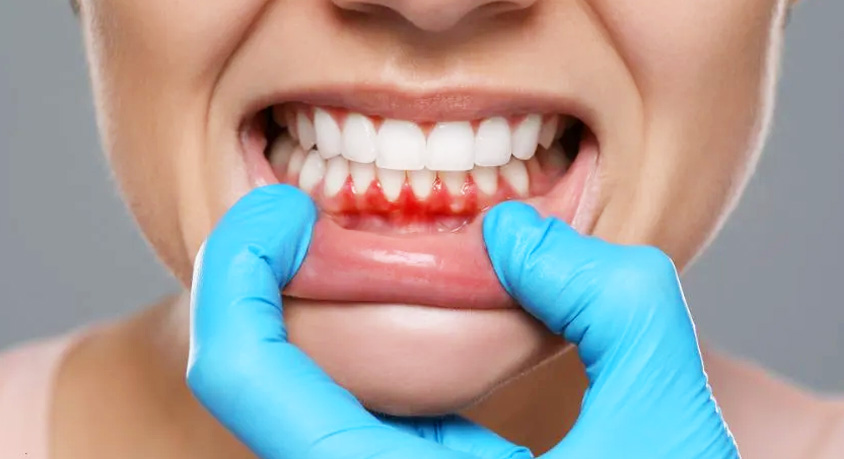
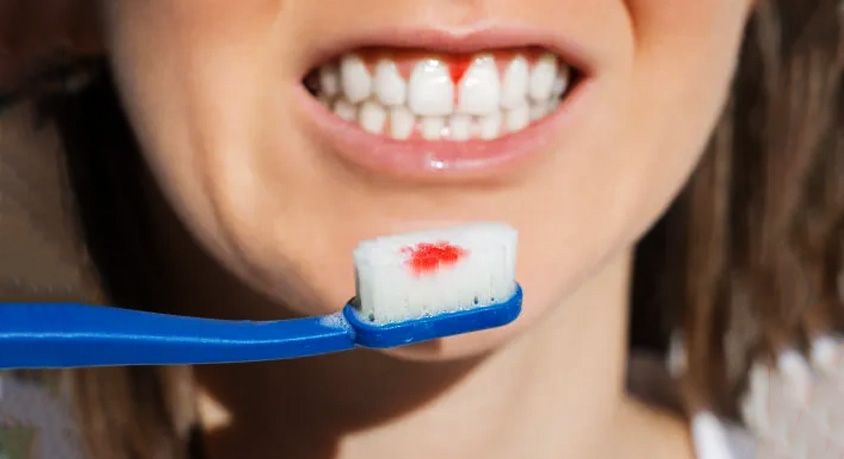
You finish brushing, rinse your mouth, and notice pink in the sink. The next day, the same thing. So you buy a softer toothbrush and brush more gently. The bleeding continues.
- 1、Why Your Gums Bleed (Even When You Don’t Brush Hard)
- 2、The “No Pain” Trap: Why Early Gum Disease Is Silent
- 3、Mouthwash Is Not a Replacement for Flossing or Proper Brushing
- 4、How to Reverse Gum Disease Naturally (Without Expensive Treatments)
- 5、When Bleeding Gums Signal Something Beyond Gingivitis
- 6、FAQs
Most people assume bleeding gums mean they brushed too hard. Some switch to mouthwash hoping to “kill the bacteria.” Others ignore it because there’s no pain. But here’s what your gums are quietly telling you: bleeding is not normal, even if it doesn’t hurt. And using a gentler brush or mouthwash alone won’t fix the real cause.
Why Your Gums Bleed (Even When You Don’t Brush Hard)
Healthy gums do not bleed with normal brushing. Bleeding is a sign of inflammation, not trauma.
The Plaque Biofilm – Your Gums Are Fighting a Sticky Layer
Within hours after brushing, a sticky film called dental plaque forms on your teeth. It’s not just leftover food – it’s a living biofilm of bacteria. When plaque accumulates along the gumline, your immune system sends inflammatory signals. Blood vessels dilate, gums become red and swollen, and they bleed easily when disturbed.
A 2019 study in the Journal of Clinical Periodontology examined over 1,000 adults who reported bleeding gums. Nearly 85% had gingivitis – the earliest, reversible stage of gum disease. Only 5% had actual trauma from brushing. The problem wasn’t the brush; it was the plaque left behind.
This is why a softer toothbrush doesn’t stop bleeding. Soft bristles remove even less plaque if used with the same technique. You’re avoiding discomfort without treating the inflammation.
The “No Pain” Trap: Why Early Gum Disease Is Silent
Tooth decay hurts early – you feel sensitivity to cold or sweets. Gum disease does not. Gingivitis can smolder for months or years without any pain.
By the time you feel pain (deep throbbing, loose teeth, or gum abscesses), the disease may have progressed to periodontitis – where the bone holding your teeth has already started dissolving. A 2021 CDC report estimated that nearly 50% of adults over 30 have some form of periodontitis, yet most don’t know until a dentist measures pocket depths.
So bleeding is a gift. It’s the earliest, cheapest warning sign you’ll get. Ignoring it is like ignoring the oil light in your car – the engine still runs, but damage is building.
Mouthwash Is Not a Replacement for Flossing or Proper Brushing
Many people reach for an alcohol-based mouthwash to “fix” bleeding gums. This is a mistake.
What Mouthwash Can and Cannot Do
Mouthwash reduces bacteria temporarily, but it cannot remove plaque biofilm. Plaque is physically stuck to teeth. Only mechanical action – brushing and flossing – can break it apart. A 2020 systematic review in the International Journal of Dental Hygiene found that mouthwash alone reduced bleeding by only 10–15%, while proper flossing reduced it by 60–70%.
Worse, strong alcohol-based mouthwashes can dry out oral tissues and even increase irritation in some people. They mask the smell of gum disease without fixing the cause.
How to Reverse Gum Disease Naturally (Without Expensive Treatments)
The good news: gingivitis is fully reversible. You don’t need a dentist for this stage – you need a consistent routine.
The Two-Minute, Two-Step Routine
- Brush properly – Use a soft or extra-soft toothbrush at a 45-degree angle toward the gumline. Gently jiggle in small circles, not back-and-forth sawing. Spend 2 full minutes.
- Floss once daily – This is non-negotiable. Flossing removes plaque from the 40% of tooth surfaces that a brush cannot reach. Expect bleeding when you start flossing – that’s normal for the first 1–2 weeks. The bleeding stops once inflammation subsides.
If Bleeding Continues After Two Weeks of Perfect Flossing
Try an interdental brush (small cone-shaped brushes) instead of floss. A 2018 study in Journal of Clinical Periodontology showed that interdental brushes removed 30% more plaque than floss in people with wider tooth gaps. If your gums still bleed after 14 days of diligent cleaning, see a dentist – you may have tartar below the gumline that only professional scaling can remove.
When Bleeding Gums Signal Something Beyond Gingivitis
Sometimes bleeding gums are not caused by plaque alone.
Red Flags for Other Conditions
- Bleeding from multiple sites in the mouth without obvious plaque – possible vitamin C deficiency (scurvy, rare but real in older adults with poor diets).
- Gums that bleed profusely from minor brushing and you also bruise easily elsewhere – possible blood disorder or platelet issue.
- Bleeding accompanied by persistent mouth sores or a white patch – needs evaluation for oral pathology.
Also, certain medications (blood thinners like warfarin, apixaban) increase bleeding tendency. In those cases, bleeding doesn’t necessarily mean gum disease is severe – but you still need to remove plaque gently. Never stop blood thinners without a doctor’s advice.
FAQs
Q: Is it safe to floss if my gums bleed a lot?
A: Yes. Bleeding from flossing is a sign of existing inflammation, not damage. Continue flossing daily. Within 7–14 days, the bleeding should stop as your gums heal. If bleeding persists beyond three weeks with good technique, see a dentist.
Q: Do electric toothbrushes help with bleeding gums?
A: Yes, specifically ones with pressure sensors and a round oscillating head. A 2019 Cochrane review found that electric toothbrushes reduced plaque and gingivitis slightly better than manual brushes, primarily because people brush for the recommended time. But a manual brush used correctly works too.